Best Vercel Alternatives (2026)
On this page
Vercel is the default choice for Next.js and JAMstack frontends, and for good reason, the Git-push workflow, edge network, and per-PR preview deployments genuinely work well. But if you've hit the 100 GB bandwidth cap on Hobby, run into the non-commercial restriction on the free tier, or watched your Pro bill climb with every new teammate, you're probably wondering what else is out there.
Here are five Vercel alternatives worth knowing about, what each one does differently, and when you'd pick them over Vercel.
1. Puter
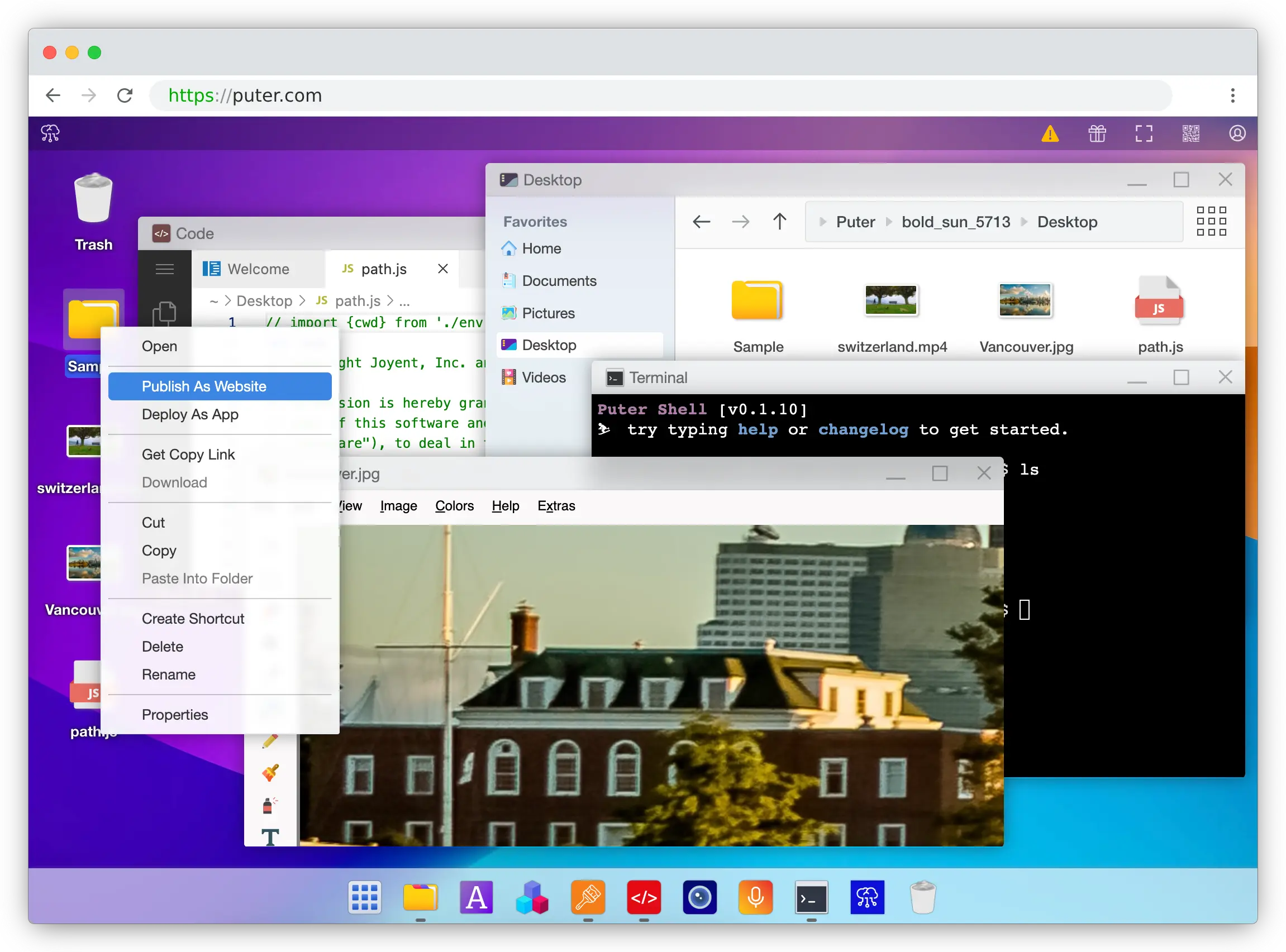
Puter is a cloud operating system that runs in your browser, with built-in static site hosting, serverless workers, object storage, key-value databases, and an AI API. It supports every major frontend framework, from React, Next.js, and Vue to Svelte, Astro, and plain HTML.
What Makes It Different
Unlike Vercel, Puter lets you publish a website without Git, without a CLI, and without a build config file. You drag your folder into Puter, right-click it, and select "Publish as Website." You get a free puter.site subdomain, free SSL, and changes go live instantly, with no rebuild or redeployment step. Vercel requires a new deployment for every change.
Full-stack is equally direct: create a worker.js file, define routes using a familiar router API (router.get('/api/hello', ...)), and deploy with one click. Workers have access to integrated AI, KV, and object storage through Puter.js, capabilities Vercel pushes out to separate paid add-ons like Vercel Blob, Vercel KV, and the AI SDK. Puter also supports a User-Pays Model where your end users can cover their own resource costs through their Puter account, something Vercel's pricing model doesn't accommodate.
Key Differences from Vercel
Puter doesn't specialize in Next.js server-side rendering the way Vercel does, it's a generalist for static sites, SPAs, and lightweight backend logic via workers. Git-based deploy previews and environment-per-PR workflows are less first-class than on Vercel, though the trade-off is that Git is optional rather than required. Observability and analytics are lighter than Vercel's built-in dashboards. On the plus side, commercial use is allowed on the free tier, unlike Vercel's Hobby plan which restricts any revenue-generating use.
Comparison Table
| Feature | Puter | Vercel |
|---|---|---|
| Free tier |  Generous Generous |
(Hobby) |
| Commercial use on free tier | |
 |
| Deployment method | Drag-and-drop, no Git required | Git-based |
| Build step required | |
|
| Instant updates (no redeploy) | |
|
| Static hosting | |
|
| Serverless functions | (Workers) |
|
| Free SSL | |
|
| Custom domains | |
|
| Preview deployments | Limited | per PR |
| Integrated AI/DB/Storage | via Puter.js |
(add-ons) |
| User-pays model | |
|
| Cloud OS / file manager UI | |
|
| Open-source | |
|
| Next.js SSR specialization | Static/SPA-first | First-class |
| Framework support | All major frameworks | All major frameworks |
| Best for | Zero-friction publishing with optional backend + AI | Next.js teams with Git workflows |
2. Render
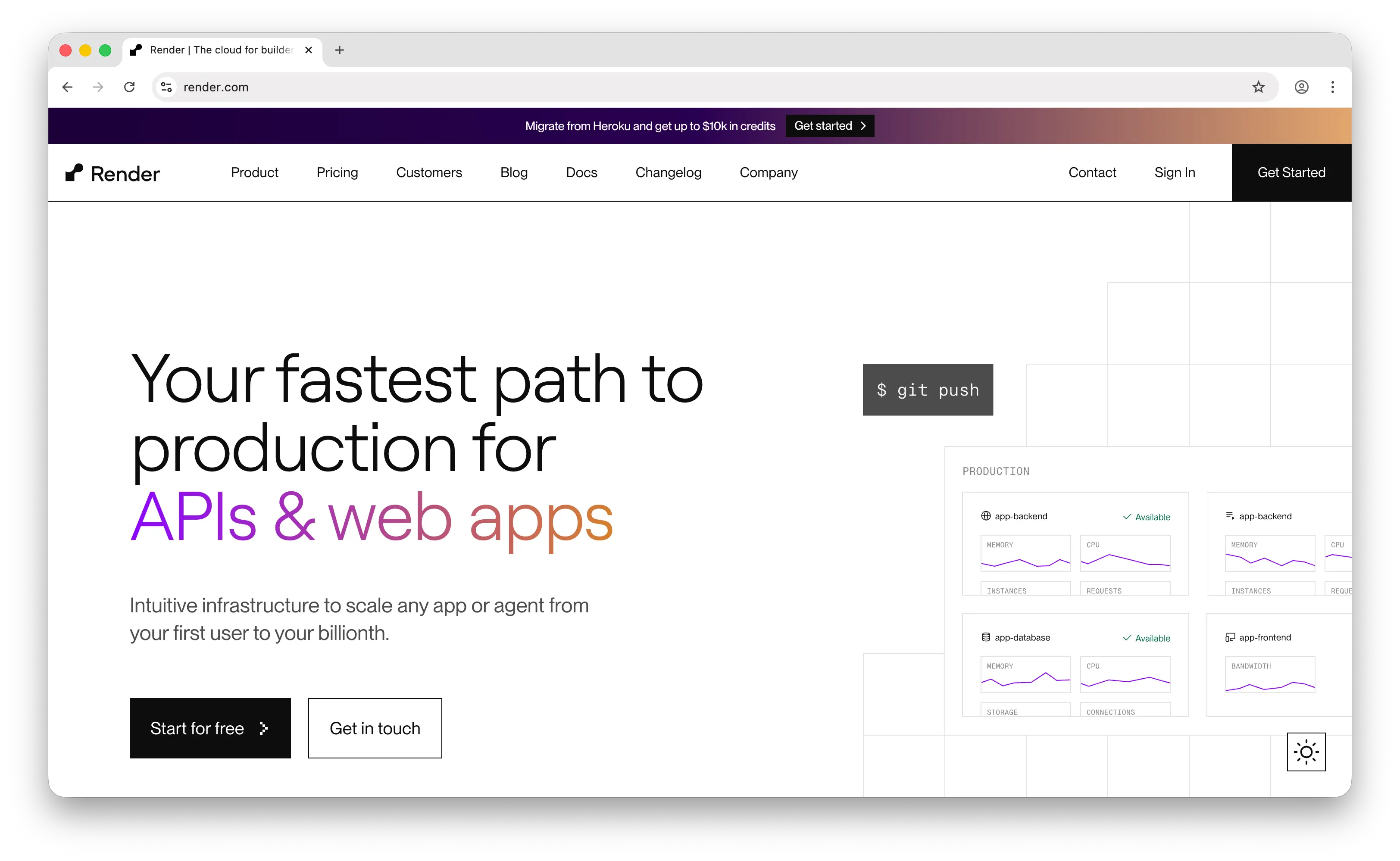
Render is a cloud hosting platform that positions itself as a modern Heroku replacement. Like Vercel, it supports static sites and Git-based deployments, but its real focus is on full-stack apps with long-running backends.
What Makes It Different
Render fills the gap Vercel leaves open: long-running services, background workers, cron jobs, and managed databases. You can run a web service, a worker, a Postgres instance, and a cron job in one place, all defined declaratively via Render Blueprints (YAML infrastructure-as-code). Each PR gets a full preview environment, optionally with its own isolated database.
Pricing is plan-based, not usage-based. You pick an instance size ($7/mo starter, $25/mo standard, and up) and that's what you pay. This makes monthly costs predictable in a way Vercel's overage model isn't, a common reason teams migrate between the two.
Key Differences from Vercel
Render is regional, not edge-first, so it doesn't compete with Vercel's global edge network for latency-sensitive static assets. Free web services spin down after inactivity and have cold starts, unlike Vercel's Hobby sites which stay warm. It's not built around Next.js SSR the way Vercel is, and its CI pipeline for static sites is less optimized. On the other hand, commercial use is allowed on the free tier, and the jump from free to $7/mo is far cheaper than Vercel's $20/user Pro plan for a single developer.
Comparison Table
| Feature | Render | Vercel |
|---|---|---|
| Pricing model | Plan-based (starts $7/mo) | Usage-based (Pro $20/user/mo) |
| Commercial use on free tier | |
|
| Free static hosting | |
|
| Free web services | (750 hrs, spins down) |
|
| Static hosting | |
|
| Always-on backends | (paid) |
(functions only) |
| Background workers | |
|
| Cron jobs | |
|
| Managed Postgres | |
Via add-on |
| Managed Redis / KV | |
Via add-on |
| Docker / custom runtimes | |
Limited |
| Infrastructure-as-code | (Blueprints) |
Limited |
| Preview environments | (with isolated DBs) |
|
| Global edge network | (regional) |
|
| Predictable monthly cost | |
(overages) |
| Best for | Full-stack apps with databases and workers | Next.js and JAMstack frontends |
3. Netlify
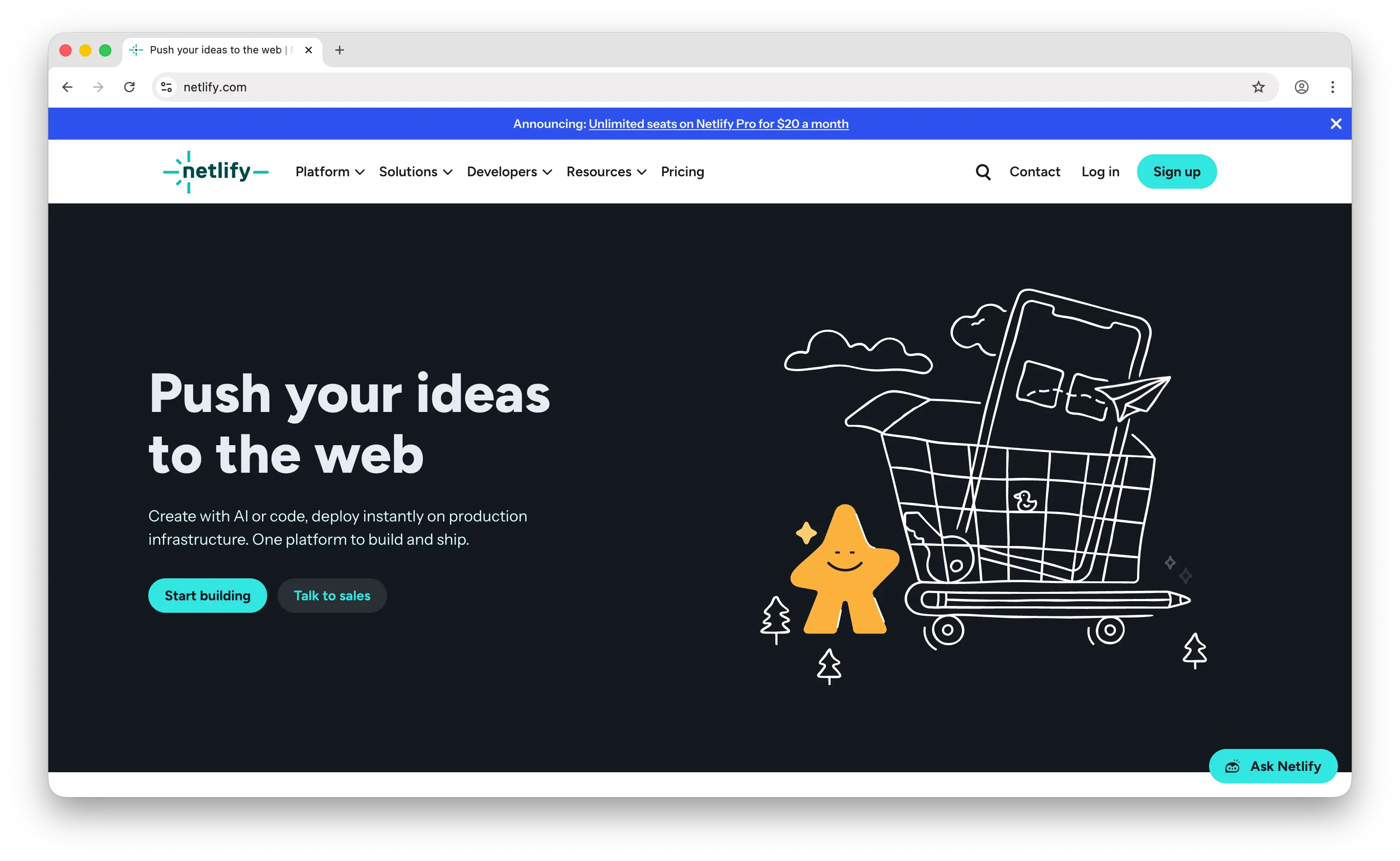
Netlify is the platform that popularized JAMstack hosting and remains Vercel's closest head-to-head competitor. Both offer Git-push deployments, deploy previews, edge and serverless functions, and a $20/seat pro plan.
What Makes It Different
Netlify ships several features Vercel doesn't match natively: built-in forms handling (no backend needed to accept submissions), Netlify Identity for authentication, and split testing at the CDN level. It's also more framework-neutral than Vercel, teams using Astro, Hugo, Gatsby, or SvelteKit often prefer Netlify because it doesn't privilege Next.js.
As of April 2026, Netlify's Credit Pro plan includes unlimited team member seats, which is a meaningful pricing win against Vercel's $20-per-seat model as your team grows. Free-tier limits (100 GB bandwidth, 300 build minutes, 125K function invocations) allow commercial use.
Key Differences from Vercel
Netlify moved to a credit-based billing system in September 2025. Every deploy, GB of bandwidth, and GB-hour of compute burns credits at different rates, which can make cost forecasting harder than Vercel's itemized usage. Bandwidth overages are notably expensive at $55 per 100 GB, versus roughly $15 per 100 GB on Vercel. Next.js integration is good but not as tight as on Vercel. Netlify also has a well-documented history of surprise bills during traffic spikes, so hard spend caps are worth configuring up front.
Comparison Table
| Feature | Netlify | Vercel |
|---|---|---|
| Pricing model | Credit-based (Free, Pro $20/user) | Hobby free, Pro $20/user/mo |
| Commercial use on free tier | |
|
| Free bandwidth | 100 GB | 100 GB |
| Free build minutes | 300 | 6,000 |
| Bandwidth overage | ~$55 / 100 GB | ~$15 / 100 GB |
| Static hosting | |
|
| Serverless functions | |
|
| Edge functions | |
|
| Deploy previews | |
|
| Built-in forms handling | |
|
| Built-in identity / auth | |
|
| Split testing | |
|
| Next.js integration | Good | First-class |
| Framework neutrality | (Astro, Hugo, Gatsby, SvelteKit) |
Next.js-focused |
| Team seats (Pro) | Unlimited (Credit Pro) | $20 / seat |
| Hard spend cap | Free tier only | Limited controls |
| Best for | JAMstack teams needing forms, identity, and framework neutrality | Next.js-first teams |
4. Cloudflare Pages
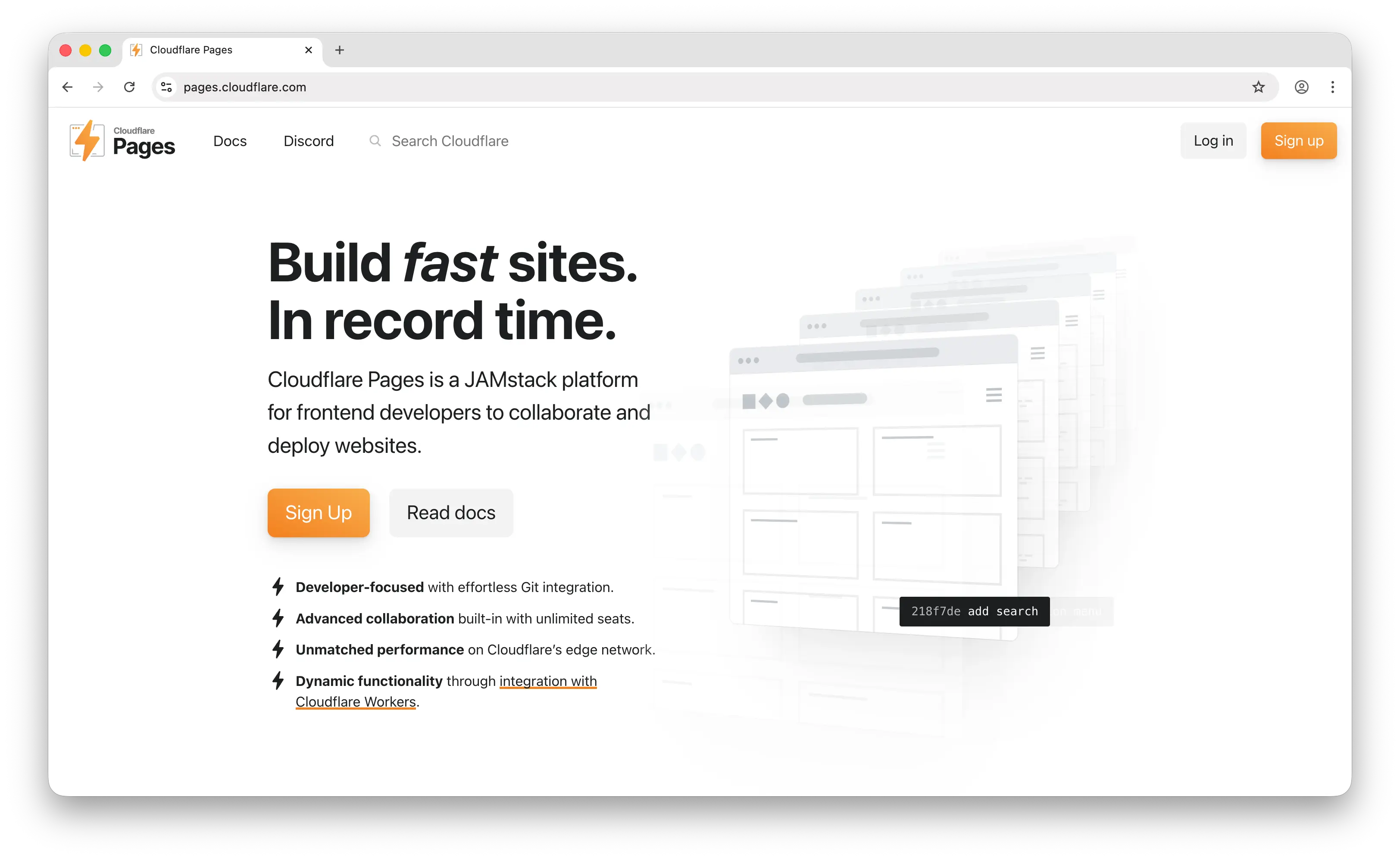
Cloudflare Pages is Cloudflare's Git-integrated static and full-stack hosting platform, built on top of its global network of 300+ edge locations.
What Makes It Different
The free tier is unmatched in this category: unlimited bandwidth, unlimited requests, unlimited sites, and unlimited team seats, with commercial use allowed. Vercel caps Hobby at 100 GB/month and charges $0.15/GB on Pro overages. For high-traffic sites, the difference is measured in dollars per day.
Cloudflare Pages is tightly integrated with the rest of Cloudflare's developer platform: Workers for full-stack logic, R2 for object storage (with zero egress fees, a major saving over S3 or Vercel Blob), D1 for SQLite at the edge, and KV for key-value storage. Pages Functions share the Workers free tier of 100,000 requests/day.
Key Differences from Vercel
The real free-tier constraint is builds: 500 per month with only 1 concurrent build. Teams that deploy multiple times per day on active projects will hit this. Workers use a V8 isolate runtime rather than full Node.js, which gives near-zero cold starts but means some Node libraries need alternatives. Next.js support exists but lags Vercel's, expect some rough edges on advanced SSR features. The developer experience is more infra-flavored (Wrangler CLI, wrangler.toml) and less polished than Vercel's dashboard.
Comparison Table
| Feature | Cloudflare Pages | Vercel |
|---|---|---|
| Pricing model | Free (generous), Pro add-ons | Hobby free, Pro $20/user/mo |
| Commercial use on free tier | |
|
| Free bandwidth | Unlimited |
100 GB |
| Free requests (static) | Unlimited |
1M edge requests |
| Free builds | 500 / mo, 1 concurrent | 6,000 build minutes |
| Unlimited team seats (free) | |
|
| Static hosting | |
|
| Serverless functions | (Workers) |
|
| Edge network | 300+ locations | Global edge |
| Node.js compatibility | Partial (V8 isolates) | Full |
| Cold starts | Near-zero | Low |
| Integrated object storage | (R2, zero egress) |
Vercel Blob (paid) |
| Integrated KV / SQL | (KV, D1) |
Via add-ons |
| Preview deployments | |
|
| Next.js support | Growing | First-class |
| Developer experience | Infra-flavored (Wrangler CLI) | Polished dashboard |
| Best for | High-traffic sites and edge-first apps | Next.js, teams that value DX |
5. Firebase Hosting
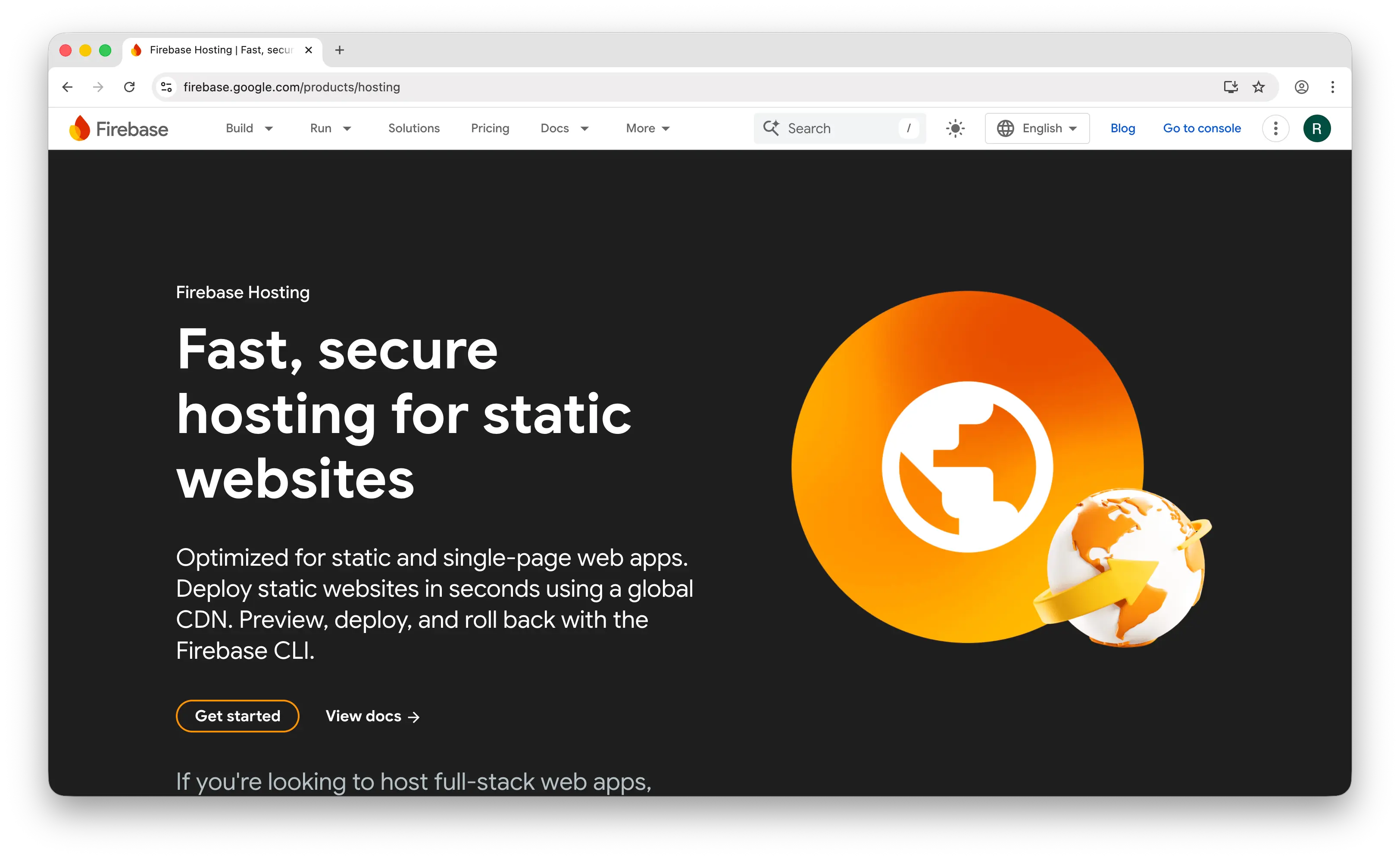
Firebase Hosting is Google's static and dynamic web hosting product, part of the broader Firebase platform. It's often chosen not for hosting alone but for its integration with the rest of the Firebase ecosystem.
What Makes It Different
Firebase Hosting's real strength is the ecosystem around it: Firebase Auth for sign-in (email, social providers, phone), Firestore and Realtime Database for data, Cloud Functions for serverless backends, FCM for push notifications, and first-class mobile SDKs for iOS and Android. Vercel offers none of these natively, its model assumes you'll wire up auth, a database, and a mobile SDK from separate vendors.
For SSR-heavy apps, Google now offers Firebase App Hosting (a separate, newer product) that targets Next.js and Angular directly, though it requires the paid Blaze plan.
Key Differences from Vercel
Firebase Hosting has much tighter free-tier limits than Vercel: 10 GB storage and 10 GB bandwidth per month, versus Vercel's 100 GB. Hit the limit on the free Spark plan and your site is disabled until next month. Deployment is CLI-driven (firebase deploy) rather than Git-push, and preview channels are less automatic than Vercel's per-PR deployments. Billing runs through Google Cloud on the Blaze plan, which is powerful but can be intimidating, there are no default spend caps. A February 2026 policy change tightened access to Cloud Storage for free-tier users, worth noting if you're evaluating long-term reliability.
Comparison Table
| Feature | Firebase Hosting | Vercel |
|---|---|---|
| Pricing model | Spark (free) / Blaze (pay-as-you-go) | Hobby free, Pro $20/user/mo |
| Commercial use on free tier | |
|
| Free bandwidth | 10 GB / month | 100 GB / month |
| Free storage | 10 GB | Included |
| Free-tier cutoff behavior | Site disabled | Site paused |
| Static hosting | |
|
| Serverless functions | (Cloud Functions) |
|
| Deployment method | CLI (firebase deploy) |
Git-based |
| Preview channels | (manual) |
per PR |
| Edge network | Google CDN | Vercel edge |
| Built-in authentication | (Firebase Auth) |
|
| Managed databases | (Firestore, Realtime DB) |
Via add-ons |
| Mobile SDKs (iOS/Android) | |
|
| Analytics | built-in |
Limited (Web Analytics add-on) |
| Push notifications (FCM) | |
|
| Next.js SSR | Via App Hosting (Blaze required) | Native |
| Best for | Web + mobile apps using the Google backend stack | Next.js and JAMstack frontends |
Which Should You Choose?
Puter is the right call when Git feels like overhead rather than workflow. Portfolio sites, client previews, workshop demos, internal tools, anything where the person editing the site shouldn't have to learn a deploy pipeline. The integrated AI, KV, and object storage also make it a surprisingly capable backend for small apps, not just a static host.
Render wins when your app has a pulse. Databases that persist between requests, workers draining queues, cron jobs at 3am, things a serverless-only model fights you on. Vercel pushes this work onto third-party services; Render keeps it all in one dashboard with pricing you can actually forecast.
Netlify is the safest migration path from Vercel if you aren't married to Next.js. The DX is similar enough that your team won't feel lost, and you inherit forms, identity, and split testing without bolting on extra services. Just watch bandwidth, the overage rates bite harder than Vercel's do.
Cloudflare Pages is the answer when your traffic is spiky, viral, or just genuinely large. Free unlimited bandwidth isn't a marketing line, it's the actual plan. Accept a slightly rougher CLI-driven workflow and you get economics nobody else in this list can match.
Firebase Hosting really only makes sense if you're already committed to Firebase. If Firestore and Firebase Auth are powering your app, hosting alongside them is frictionless. If they aren't, the 10 GB bandwidth cap and CLI-only deploys make this the weakest pure-hosting option in the lineup.
Stick with Vercel when Next.js SSR, ISR, and integrated preview environments are load-bearing parts of how your team ships. You pay for that polish in per-seat fees and bandwidth overages, but for teams deploying Next.js daily, that cost is often worth it.
Conclusion
The best Vercel alternatives are Puter, Render, Netlify, Cloudflare Pages, and Firebase Hosting. Each takes a different approach to shipping web apps: Puter offers a cloud OS with drag-and-drop publishing and integrated backend services, Render optimizes for full-stack apps with predictable pricing, Netlify doubles down on JAMstack with built-in forms and identity, Cloudflare Pages leverages its global edge network for unlimited-bandwidth hosting, and Firebase Hosting fits naturally into the Google mobile-first ecosystem. Whichever platform you choose, the best option is the one that fits your stack, your traffic profile, and how hands-on you want to be with infrastructure.
Related
- How to Host a Website for Free
- Deploy your Next.js Application with Puter
- Deploy your Astro Site with Puter
- Deploy your Flutter Web App with Puter
- Deploy your Angular App with Puter
- Deploy your Nuxt Application with Puter
- Deploy Your Vue.js App with Puter
- Deploy Your SvelteKit App With Puter
- Getting Started with Puter.js
- Top 5 AWS Lambda Alternatives (2026)
- Best Netlify Alternatives (2026)
- Top 5 Render Alternatives (2026)
- Top 5 Heroku Alternatives (2026)
- Top 5 Railway Alternatives (2026)
- Top 5 Fly.io Alternatives (2026)
- Best Neocities Alternatives (2026)
- Top 5 Cloudflare Workers Alternatives (2026)
- Best Cloudflare Pages Alternatives (2026)
- Best GitHub Pages Alternatives (2026)
Ship a Full-Stack App with One Prompt
Create a to-do list app using Puter.js
Coding manually? see the guide