Top 5 Glitch Alternatives (2026)
On this page
On July 8, 2025, Glitch shut down project hosting and user profiles, ending nearly a decade as the friendliest place on the web to build, remix, and share small apps. The dashboard stays accessible through the end of 2025 for code exports and subdomain redirects, but the era of in-browser editing with a free live URL on glitch.me is over. For a community of more than a million tinkerers, hobbyists, educators, and indie devs, the question now is: where do you go next?
In this article, you'll learn about five Glitch alternatives, how they compare, and which one might be the best fit for your project.
1. Puter
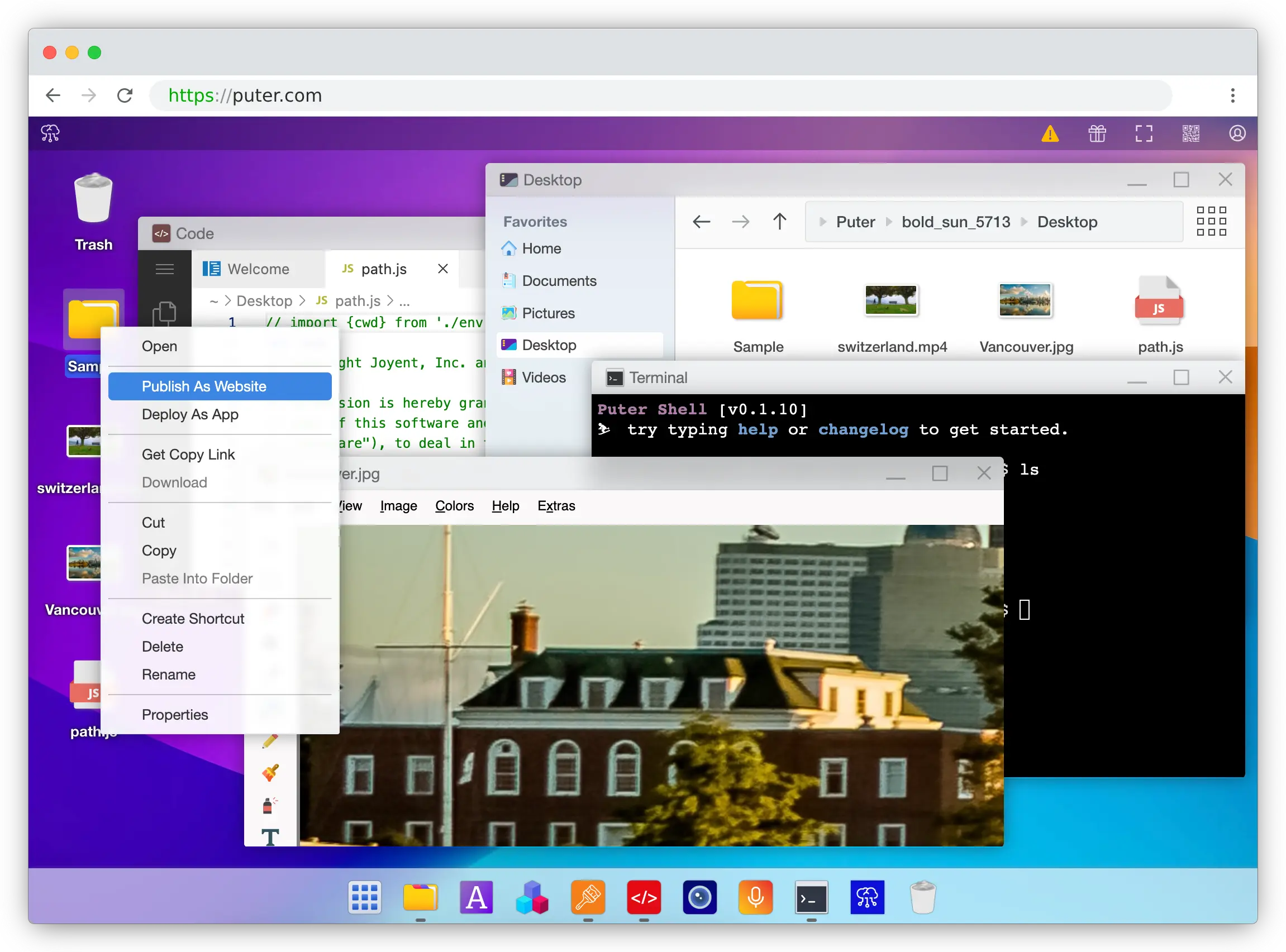
Puter is an open-source "internet OS" that runs in your browser, combining a personal cloud, an app platform, and a full development environment. It includes a VS Code-based IDE, instant website hosting, a cloud filesystem, and Puter.js — a JavaScript library that adds AI, cloud storage, database, and authentication to any frontend with no backend.
What Makes It Different
Like Glitch, Puter gives you an in-browser code editor and an instant live URL on a free subdomain. The difference is what sits underneath. Glitch ran a Node.js server for every project; Puter doesn't, because most of what you'd write a server for is already there. A single <script src="https://js.puter.com/v2/"> tag in your HTML unlocks AI APIs, object storage, a key-value database, and authentication directly from your frontend through Puter.js — no API keys to manage and no backend to deploy. For server-side logic when you need it, Serverless Workers add a routed backend with a one-click deploy.
The other big shift is around AI. Glitch had no AI story — if you wanted GPT or Claude in a project, you brought your own API key and ate the bill yourself. Puter ships 400+ models out of the box, and through the User-Pays Model, each user of your app covers their own AI and cloud usage from their own Puter account. That means you can ship an always-on hobby AI app without your bill scaling with your audience.
Key Differences from Glitch
Puter is architected as a cloud OS rather than a project-centric IDE, so users boot into a desktop environment and open the editor as one of many apps. It does not yet have a one-click "remix" loop that lets you fork any public running project the way Glitch did, though the App Store (60,000+ live apps) provides discovery. Puter doesn't run persistent Node.js server processes for hosted apps either — you ship static or client-side code and use Puter.js or a Worker to handle backend needs. The self-hosted version is in active development and still considered alpha.
Comparison Table
| Feature | Puter | Glitch |
|---|---|---|
| In-browser IDE |  VS Code-based VS Code-based |
|
| Instant hosting + live URL | |
|
| Free tier | User-pays model |
(shut down) |
| Built-in AI (GPT, Claude, DALL·E, etc.) | No API keys |
 |
| Built-in auth, storage, database | Via Puter.js |
|
| One-click remix of public apps | Limited (App Store) | |
| Real-time collaboration | |
|
| Persistent Node.js runtime | |
|
| Custom domains | |
(paid) |
| Open-source / self-hostable | AGPL-3.0 |
|
| App marketplace / discovery | 60,000+ apps |
|
| Best for | Hobby and indie devs who want zero-cost AI and cloud features in web apps | (was) Beginners and tinkerers building Node.js web apps |
2. Val Town
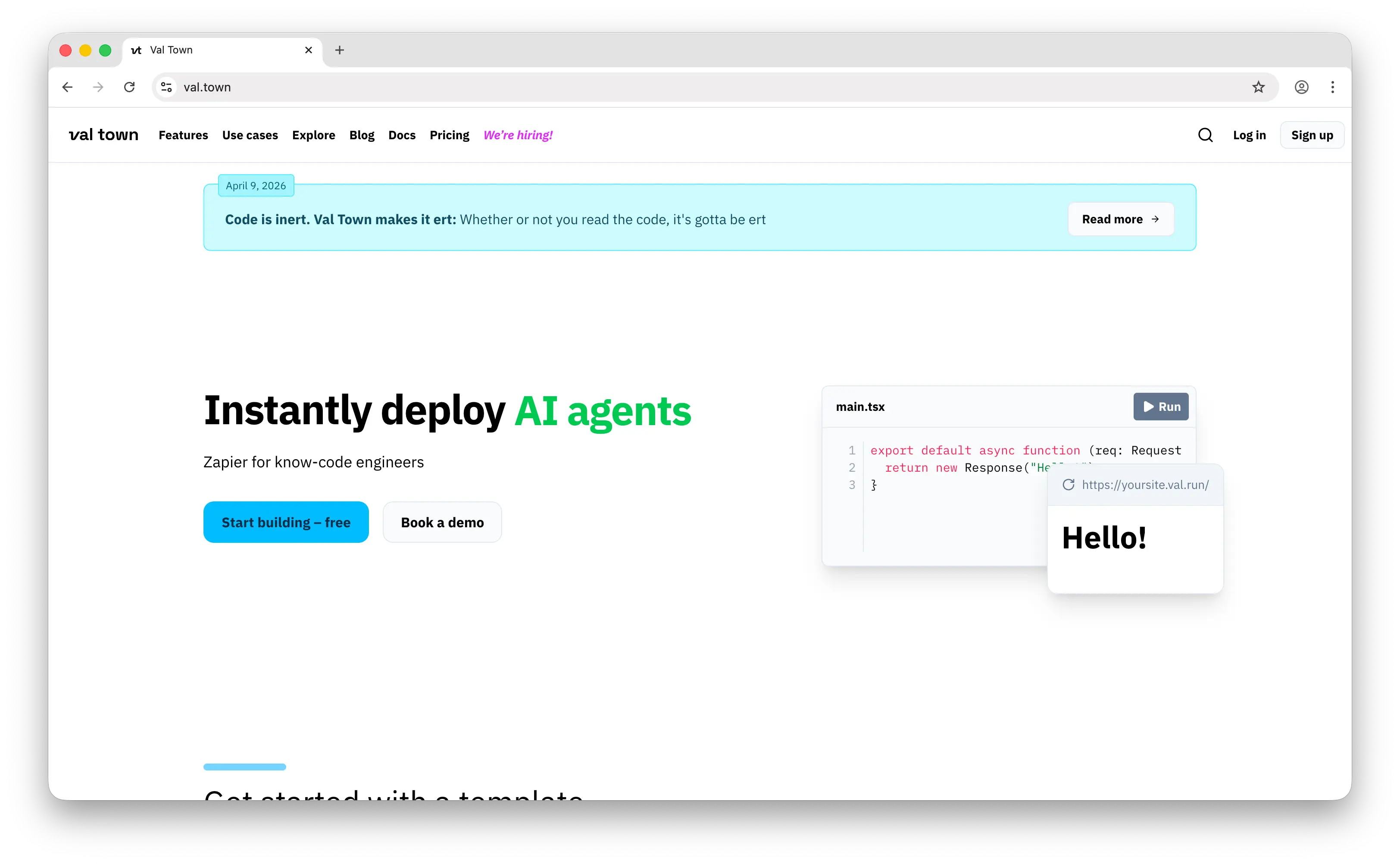
Val Town is a JavaScript and TypeScript platform for writing small, runnable scripts called "vals." It's the closest cultural successor to Glitch's remix-and-share spirit, with one-click forking of any public val.
What Makes It Different
Val Town is built around the idea of small, shareable units of code. Every val is a snippet that can be an HTTP endpoint, scheduled cron, email handler, or utility function, with a live URL the moment you save. You can fork any public val, edit it, and ship your version in seconds, the same loop that made Glitch addictive. The editor runs Deno's official Language Server for accurate TypeScript intelligence, every val now gets its own SQLite database, and Townie (their AI coding agent) can write vals from natural language with transparent pay-per-use pricing.
Glitch's longtime community director Jenn Schiffer (the self-described "glitch witch") writes vals on the platform, which says something about the cultural lineage.
Key Differences from Glitch
Vals are small by design. Val Town is great for scripts, bots, webhooks, internal tools, and tiny APIs, but it's not built for full multi-page web apps the way Glitch was. The company has also pivoted toward serving small technical teams building automations and internal tools, with Teams plans aimed at YC-style startups, though the free hobby tier remains. There's no equivalent to Glitch's broad Node.js server hosting model — vals are functions, not long-running processes.
Comparison Table
| Feature | Val Town | Glitch |
|---|---|---|
| In-browser IDE | |
|
| Instant hosting + live URL | |
|
| Free tier | |
(shut down) |
| One-click remix / fork | |
|
| Real-time collaboration | Limited | |
| Full web apps | Limited (small vals) | |
| Cron / scheduled jobs | |
|
| HTTP endpoints / APIs | |
|
| Per-val SQLite database | |
|
| Built-in AI agent | Townie |
|
| Custom domains | |
(paid) |
| Open-source / self-hostable | |
|
| Community / public showcase | |
|
| Best for | Small JS/TS scripts, automations, agents, and remix-style sharing | (was) Full hobby web apps |
3. Replit
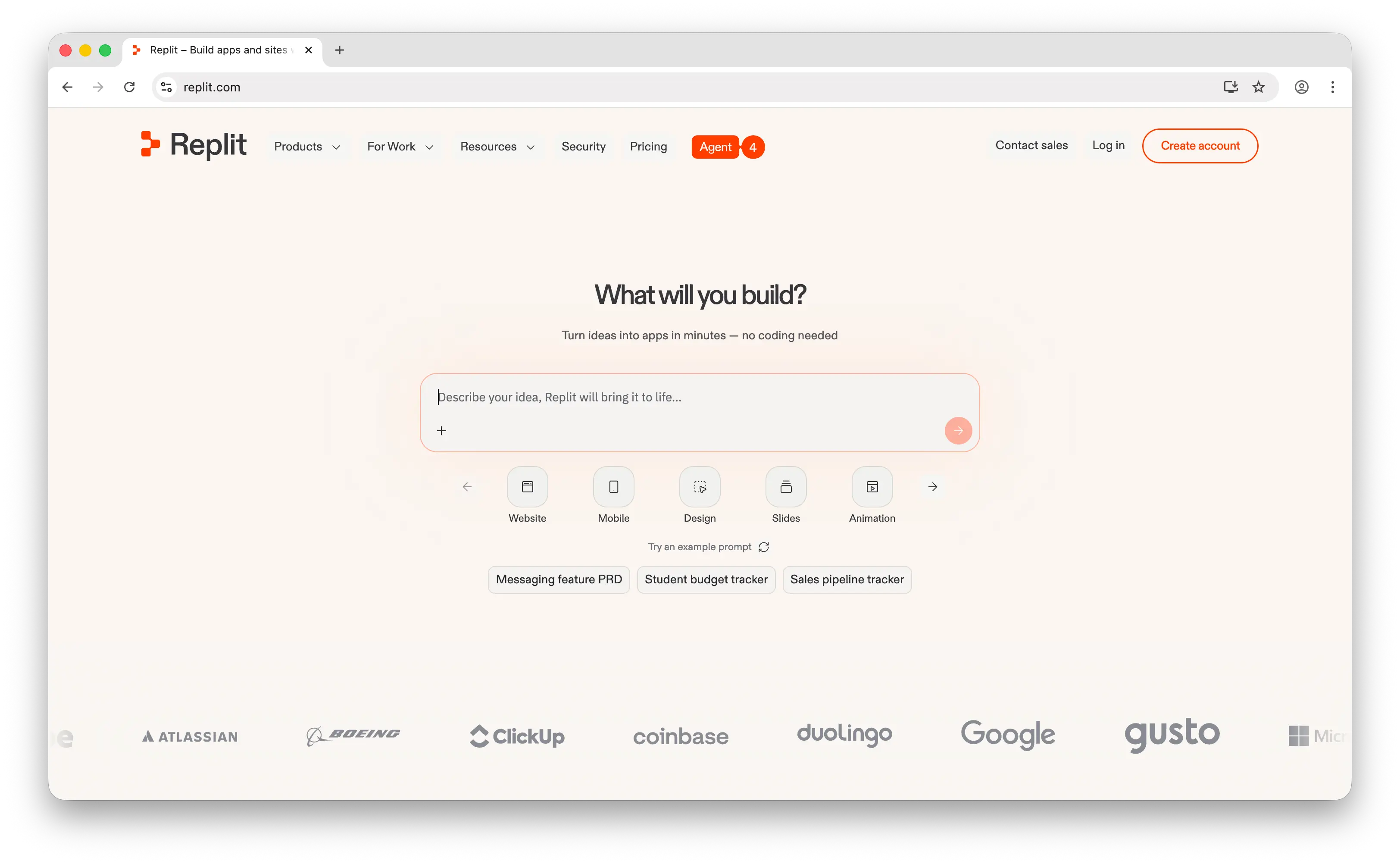
Replit is a cloud development platform with a browser IDE, integrated hosting, and support for 50+ languages. It was historically the most direct Glitch competitor, though it has pivoted hard toward AI-driven coding.
What Makes It Different
Replit's flagship is now Agent 3, an autonomous AI coding agent that can work for up to 200 minutes per session, spawn subagents, run tests, and ship full features from a natural language prompt. The platform combines this with a real browser IDE, real-time multiplayer editing, integrated databases, deployments, and a $3B valuation that has fueled rapid product development. If you want to type "build me a Pomodoro app with Google login" and watch it scaffold, deploy, and iterate, Replit leads.
Replit also has the broadest language support on this list (50+), genuine multiplayer collaboration, and one of the largest hosted-IDE user bases in the world.
Key Differences from Glitch
Replit's pricing has moved a long way from Glitch's hobby-friendly identity. A February 2026 overhaul retired the old Teams tier and introduced effort-based credit pricing, with Core at $25/month, Pro at $100/month for 15 builders, and heavy users reporting $100–$300/month in overage charges when the Agent gets stuck in loops. The free Starter tier still exists but has a daily Agent cap and the Agent trial expires. The casual "free playground for tinkering" feel that Glitch had is mostly gone — Replit is now an AI development product with serious price tags attached.
Comparison Table
| Feature | Replit | Glitch |
|---|---|---|
| In-browser IDE | |
|
| Instant hosting + live URL | |
|
| Free tier (no credit card) | Limited |
(shut down) |
| Real-time collaboration | |
|
| One-click fork / template | |
|
| Persistent Node.js runtime | (paid) |
|
| Language support | 50+ languages | JavaScript / Node.js |
| Autonomous AI agent | Agent 3 |
|
| Integrated database | |
|
| Custom domains | (Core+) |
(paid) |
| Open-source / self-hostable | |
|
| Predictable pricing | Effort-based credits, can spike | Flat hobby tier |
| Cost to run apps always-on | $5–$20+/mo per deployment | Was free with sleep |
| Best for | AI-assisted full-stack development with autonomous agents | (was) Casual web app tinkering on a free tier |
4. Vercel
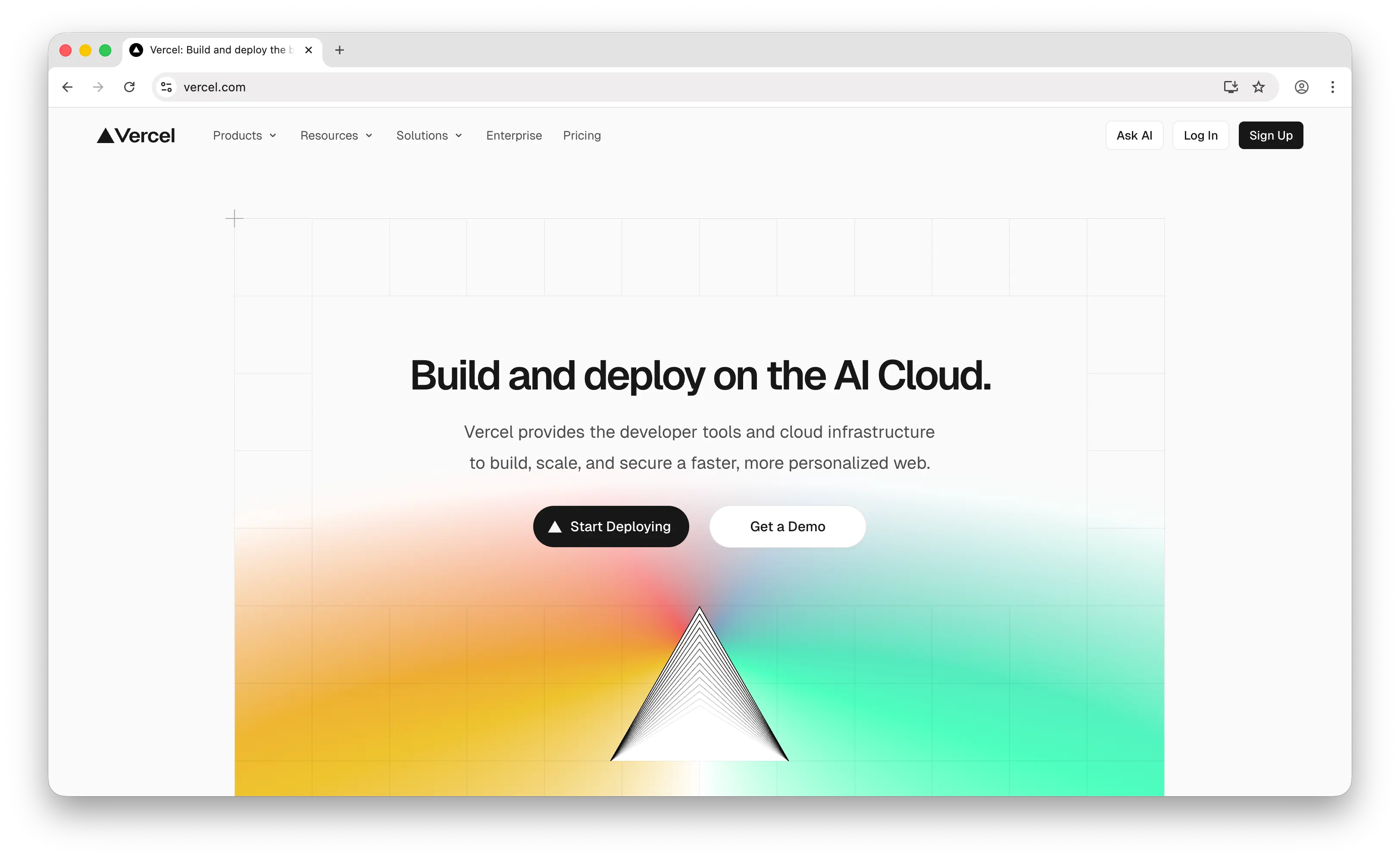
Vercel is a frontend cloud platform built around Git-based deployment, a global edge network, and best-in-class Next.js integration. It hosts over 2.3 million websites and is the default destination for most modern React/Next.js apps.
What Makes It Different
Vercel is the gold standard for production-grade frontend hosting. Push to Git, and your app deploys to a global edge network with automatic preview deployments for every branch, built-in CI/CD, automatic HTTPS, and tight Next.js integration (Vercel makes Next.js). The Hobby plan is free, includes 100GB bandwidth, custom domains, and the polished developer experience that defines the brand. Vercel also offers v0, an AI prototyping tool, and an AI Gateway for connecting to LLM providers.
Key Differences from Glitch
Vercel is not an in-browser IDE — you write code locally (or use v0 separately) and push to GitHub for deployment. The Hobby tier is strictly personal and non-commercial; using it for revenue-generating apps violates the terms of service. Function execution times cap at 60 seconds on Hobby (5 minutes on Pro), which kills longer AI agent workflows. There's no remix culture, no public app discovery, and no "edit a stranger's running code" loop. Vercel users tend to be more serious shippers — Glitch users moving here usually do so when they've outgrown casual play, not because they want to recreate it.
Comparison Table
| Feature | Vercel | Glitch |
|---|---|---|
| In-browser IDE | |
|
| Instant hosting + live URL | |
|
| Free tier | Hobby (non-commercial) |
(shut down) |
| Git-based deployment | |
Limited |
| Preview deployments per branch | |
|
| Global edge network | |
|
| Next.js / React optimization | Best-in-class |
Basic |
| Real-time collaboration | |
|
| One-click remix / fork | |
|
| Persistent Node.js runtime | Serverless only (60s Hobby / 5m Pro) | |
| Built-in AI / cloud services | Limited (AI Gateway separate) | |
| Custom domains | |
(paid) |
| Commercial use on free tier | Hobby is personal-only |
|
| Open-source / self-hostable | |
|
| Best for | Production frontend apps, especially Next.js | (was) Casual web apps with in-browser editing |
5. Netlify
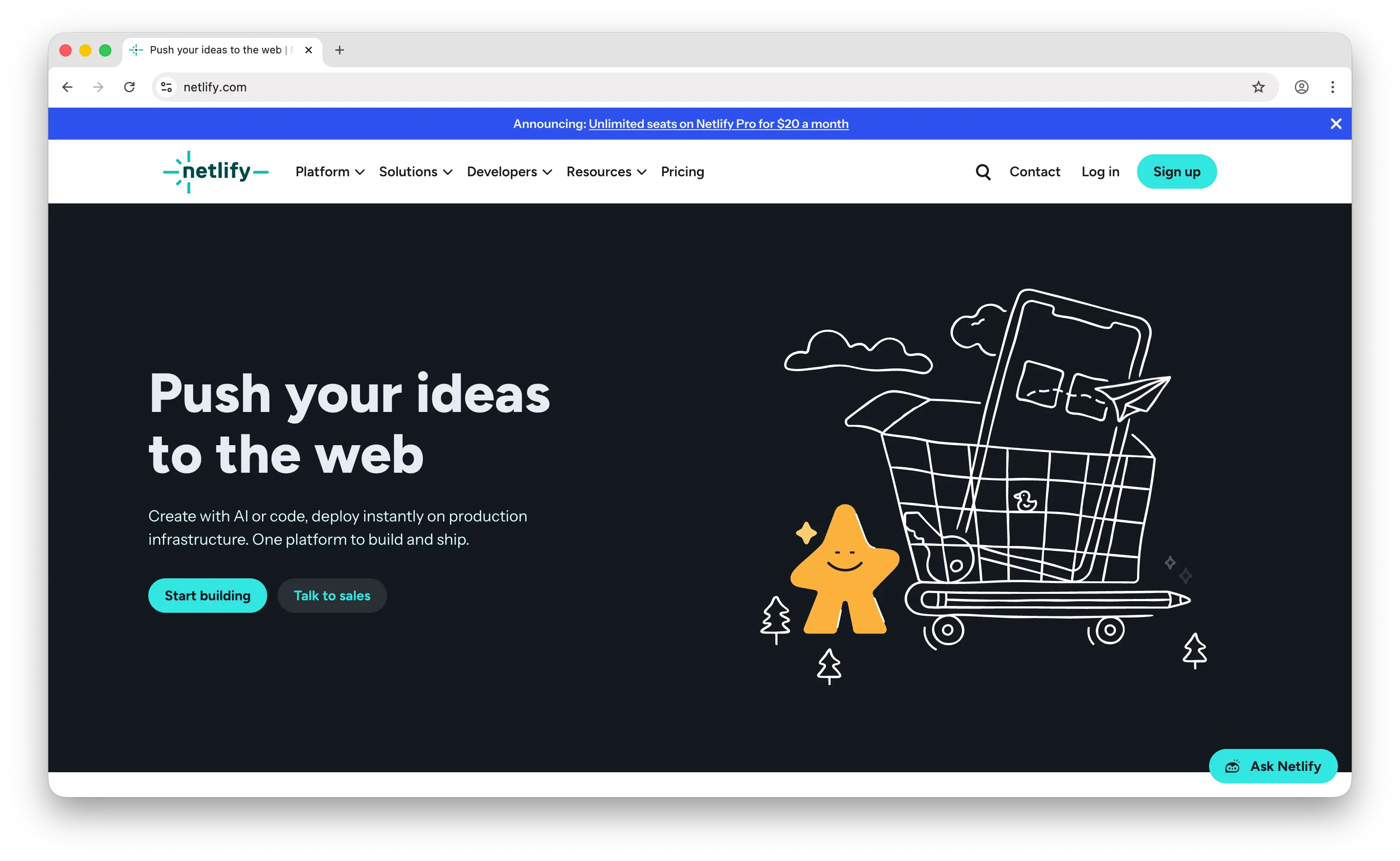
Netlify is a deployment and hosting platform that originated the JAMstack movement. Like Vercel, it focuses on Git-based deploys for static sites and modern web apps with serverless extensions.
What Makes It Different
Netlify pioneered Git-push-to-deploy for the modern web and remains one of the smoothest experiences for static and JAMstack hosting. Built-in Netlify Forms handle form submissions without any backend (free across all credit-based plans as of April 2026), Identity offers managed authentication, and Edge Functions provide serverless compute close to users. Netlify is framework-agnostic, working as well with Hugo, Jekyll, Astro, and SvelteKit as it does with Next.js, where Vercel's lock-in is stronger. As of April 2026, Netlify's Pro plan also stopped charging for additional team members on the credit-based plan.
Key Differences from Glitch
Netlify, like Vercel, is a hosting destination rather than an editing environment — there's no in-browser IDE, and you bring code from Git. In September 2025, Netlify migrated to a credit-based pricing model. The new Free plan provides 300 credits per month, where deploys cost 15 credits each, bandwidth costs 20 credits per GB, and compute costs 10 credits per GB-hour. When credits run out, all projects on your team are paused until the next billing cycle. There's no remix culture, no community gallery, and no equivalent to Glitch's casual in-browser editing loop.
Comparison Table
| Feature | Netlify | Glitch |
|---|---|---|
| In-browser IDE | |
|
| Instant hosting + live URL | |
|
| Free tier | 300 credits/month |
(shut down) |
| Git-based deployment | |
Limited |
| Preview deployments per branch | |
|
| Global edge network | |
|
| Framework-agnostic | |
Node.js focused |
| Built-in forms (no backend) | Free unlimited |
|
| Built-in identity / auth | |
|
| Real-time collaboration | |
|
| One-click remix / fork | |
|
| Persistent Node.js runtime | Serverless / edge only | |
| Custom domains | |
(paid) |
| Predictable pricing | Credit-based with paused projects on overrun | Flat hobby tier |
| Open-source / self-hostable | |
|
| Best for | Static / JAMstack sites with built-in forms and identity | (was) Casual web apps with in-browser editing |
Which Should You Choose?
Choose Puter if you want the closest end-to-end Glitch replacement: a real in-browser IDE, instant hosting, and built-in AI, auth, storage, and database, with the user-pays model that means you don't pay for infrastructure. It's the only option here whose economics are actually designed for the kind of free, always-on hobby apps that Glitch was famous for.
Choose Val Town if your favorite thing about Glitch was forking other people's code and tinkering. It's the strongest spiritual successor to Glitch's remix culture, but built around small JavaScript scripts, APIs, and cron jobs rather than full web apps.
Choose Replit if you want an AI agent that can build full applications from natural language and you're willing to pay for it. Best for serious solo developers and small teams adopting AI-driven workflows, less ideal if you want a free hobby playground.
Choose Vercel if you've outgrown Glitch and want production-grade Next.js or React hosting on a global edge network. The Hobby tier is generous for personal sites but commercial use requires a paid plan.
Choose Netlify if you're building static or JAMstack sites and value the smoothest Git-to-deploy workflow with built-in forms and identity. Be aware of the new credit-based pricing model and how usage paces against it.
Conclusion
The top 5 Glitch alternatives are Puter, Val Town, Replit, Vercel, and Netlify. Each fills a different slice of what Glitch used to offer, from Puter's full in-browser dev environment with built-in AI and a sustainable economic model, to Val Town's small-script remix culture, to the production-grade hosting of Vercel and Netlify. Whichever you choose, the right answer depends on which part of Glitch you miss most: the editor, the remix loop, the free hosting, or the friendly community vibe.
Related
- Getting Started with Puter.js
- How to Host a Website for Free
- Best Neocities Alternatives (2026)
- Best Vercel Alternatives (2026)
- Best Netlify Alternatives (2026)
- Top 5 Heroku Alternatives (2026)
- Top 5 Render Alternatives (2026)
- Top 5 Railway Alternatives (2026)
- Top 5 Fly.io Alternatives (2026)
- Best Cloudflare Pages Alternatives (2026)
- Best GitHub Pages Alternatives (2026)
Ship a Full-Stack App with One Prompt
Create a to-do list app using Puter.js
Coding manually? see the guide