Top 5 Bolt.new Alternatives (2026)
On this page
Bolt.new has become one of the fastest paths from prompt to working app — a chat-driven builder, a Claude-powered agent, WebContainers running a full Node.js environment in the browser, and Bolt Cloud handling auth, database, and deploys. You describe an app, watch it materialize in your tab, and ship to Netlify with one click.
But Bolt isn't the only way to vibecode a working app, and the token-based pricing model has pushed plenty of developers to look elsewhere. Some tools produce better default UIs. Others give you a real IDE you can drop into. A few rethink the economics entirely. Here are five Bolt.new alternatives worth considering, what each one does differently, and where each is the better pick.
1. Puter.js
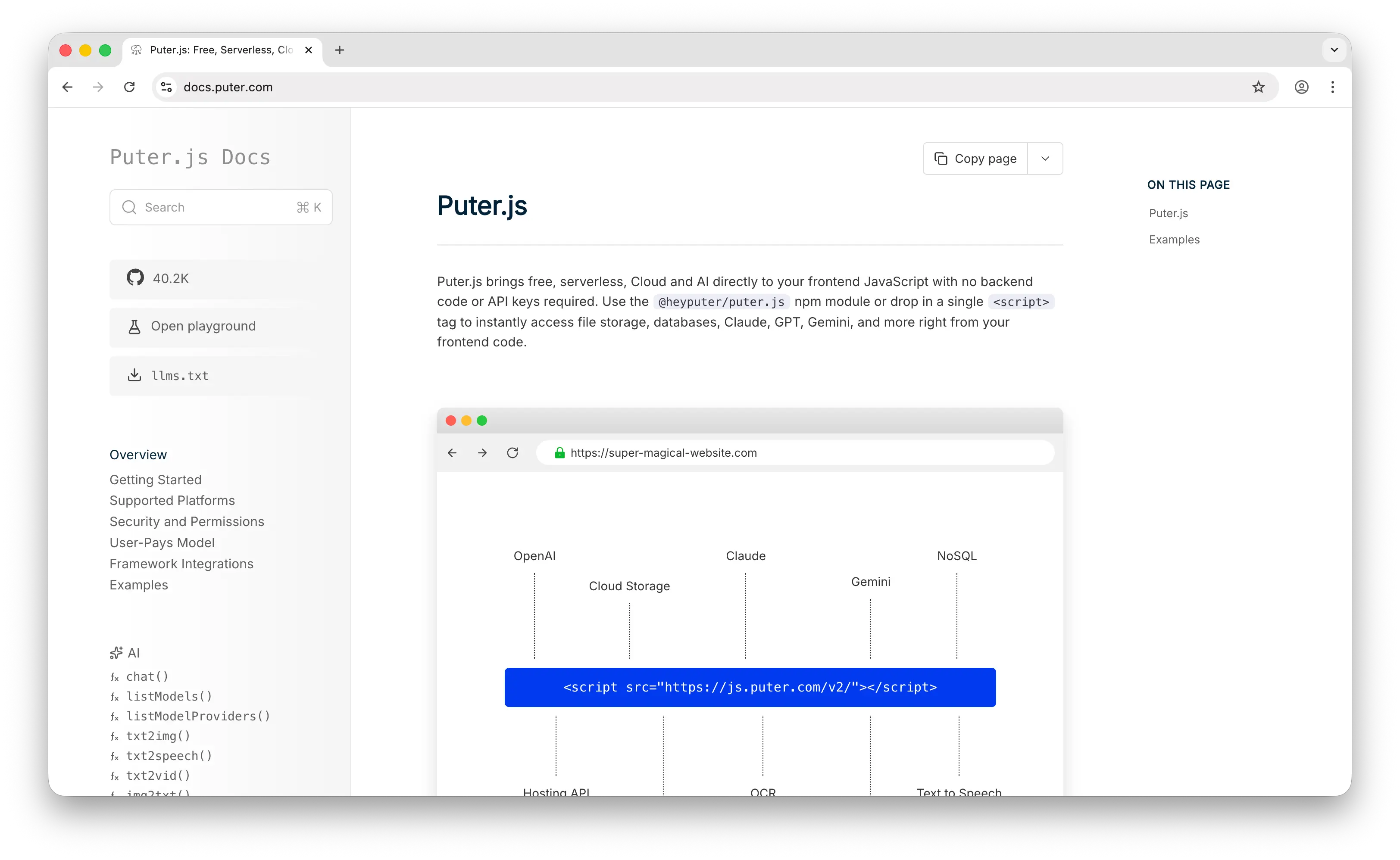
Puter.js is a client-side JavaScript library that gives you auth, a database, cloud storage, and AI without provisioning any backend. Bolt bundles a chat agent, the WebContainers runtime, and Bolt Cloud's backend into one product and meters the whole stack through tokens. Puter.js covers only the backend half — as a script tag — and lets you write the frontend with any tool you want, including Bolt itself.
What Makes It Different
Works with any frontend, including Bolt's output. Bolt's agent is the only AI builder you can use inside Bolt, and it's locked to Claude Sonnet and to Bolt Cloud as the backend. Puter.js doesn't care how the frontend was built — a Bolt export, a Cursor project, a Claude Code session, or hand-written HTML can all drop in <script src="https://js.puter.com/v2/"></script> and call Puter for auth, storage, database, and AI.
Your developer cost is $0. Bolt charges through Pro ($20–25/month) plus token usage, and reviewers consistently note that the Pro tier "rarely covers a full month of active development" before overages kick in. Puter.js uses the User-Pays Model: your app's users sign in with their own Puter account and cover their own quota for storage, database, and AI inference. Your infrastructure cost stays at $0 regardless of how many users you have.
Key Differences from Bolt.new
The two products sit at different layers. Bolt is a bundled vibecoder — chat agent, WebContainers, Bolt Cloud, Netlify deploy — and you build inside it. Puter.js is a backend SDK you call from anywhere, including the export of a Bolt build. Bolt Cloud's database is a managed Postgres-style backend; Puter gives you a NoSQL key-value store. If your app needs relational queries and SQL, Bolt is the stronger fit. Puter trades that for zero-config and zero developer cost.
Comparison Table
| Feature | Puter.js | Bolt.new |
|---|---|---|
| Product shape | Drop-in backend SDK | Bundled builder + runtime + cloud |
| Developer cost | $0 (user-pays) | $20–25/mo Pro + token overages |
| Pricing model | Flat $0 | Token-based |
| Pricing predictability | High (flat $0) | Low ("rarely covers a full month") |
| Client-side AI calls |  No API keys No API keys |
 |
| Database type | NoSQL key-value store | Bundled Bolt Cloud DB |
| Authentication | |
|
| Cloud storage | |
|
| BYO AI coding tool | Cursor, Claude Code, Lovable, etc. |
Bolt agent only |
| Hosting | |
Netlify/Vercel |
| Open-source | AGPL-3.0 |
|
| Self-hostable | |
|
| Best for | Zero-cost apps with built-in AI, BYO builder | Fast in-browser demos from a prompt |
2. Lovable
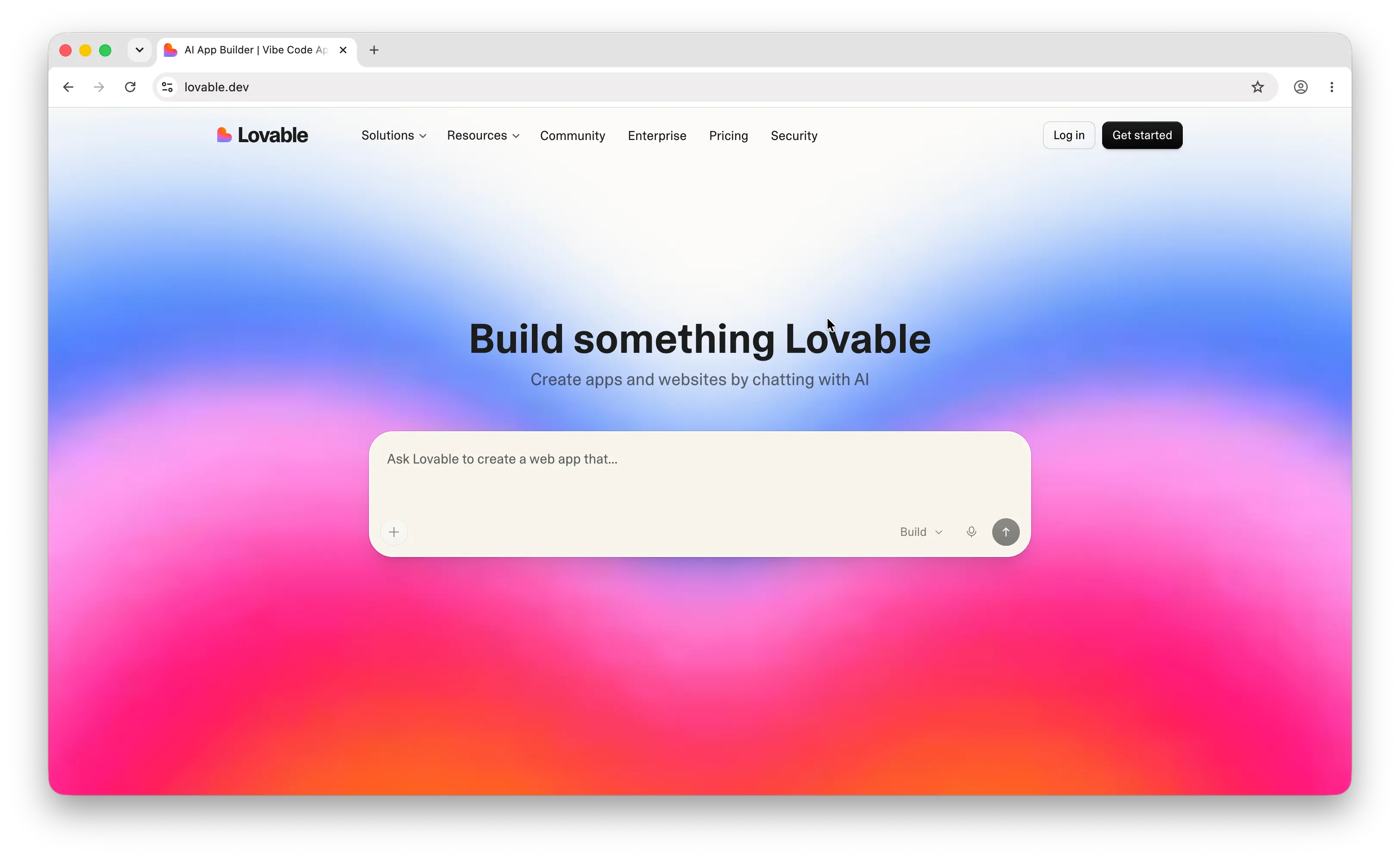
Lovable is a chat-to-app builder that generates React + Tailwind + shadcn/ui projects from natural language. It closed a $330M Series B at a $6.6B valuation in late 2025 — the biggest war chest in the category, even bigger than StackBlitz — and added mobile app generation in January 2026.
What Makes It Different
Lovable is widely considered to produce the best-looking default UI of any vibecoder. Both Lovable and Bolt generate React, but Lovable adds shadcn/ui by default, and the polish gap is real — Lovable feels like a polished MVP factory where Bolt feels like a fast scratchpad. Visual edits like color and font changes consume zero credits, which makes iterating on design cheap relative to Bolt's token meter.
Pricing is more predictable than Bolt's: Pro is $25/month with credit-based limits where the same task tends to cost the same amount. Bolt's Pro is token-based at a similar headline price, but the same prompt can charge wildly different amounts depending on how the agent decides to approach it. Lovable Cloud (managed Supabase under the hood) handles DB, auth, and storage — similar coverage to Bolt Cloud but on Supabase infrastructure rather than StackBlitz's own.
Key Differences from Bolt.new
Lovable doesn't have Bolt's WebContainers browser-runtime — apps live on Lovable's servers, not your tab — so the in-browser preview is less snappy than Bolt's. Bolt's first-draft speed is genuinely faster. But Lovable's output is closer to production-acceptable on the first pass: shadcn/ui React + Tailwind, not throwaway prototype code. If Bolt is the scratchpad, Lovable is the polish.
Comparison Table
| Feature | Lovable | Bolt.new |
|---|---|---|
| Product shape | Chat-to-app, server-side runtime | Chat-to-app, WebContainers runtime |
| UI quality | Best-in-class (React + Tailwind + shadcn) | Functional, less designer-grade |
| Runtime | Lovable's servers | WebContainers (browser-only) |
| First-draft speed | Slower (server-side) | Faster (in-browser) |
| Visual edits | Zero credits |
Counts toward token usage |
| AI model | Claude | Claude Sonnet |
| Mobile app generation | (Jan 2026) |
Via Expo integration |
| Database | Supabase (managed via Lovable Cloud) | Bundled Bolt Cloud DB |
| Authentication | |
|
| Hosting | In-platform | Netlify / Vercel |
| Pricing model | Credit-based ($25/mo Pro) | Token-based ($20–25/mo Pro) |
| Pricing predictability | Medium (credits run out fast) | Low (token-based) |
| Open-source | |
|
| Best for | Polished MVPs with designer-grade UI | Fastest path from idea to in-browser demo |
3. Replit
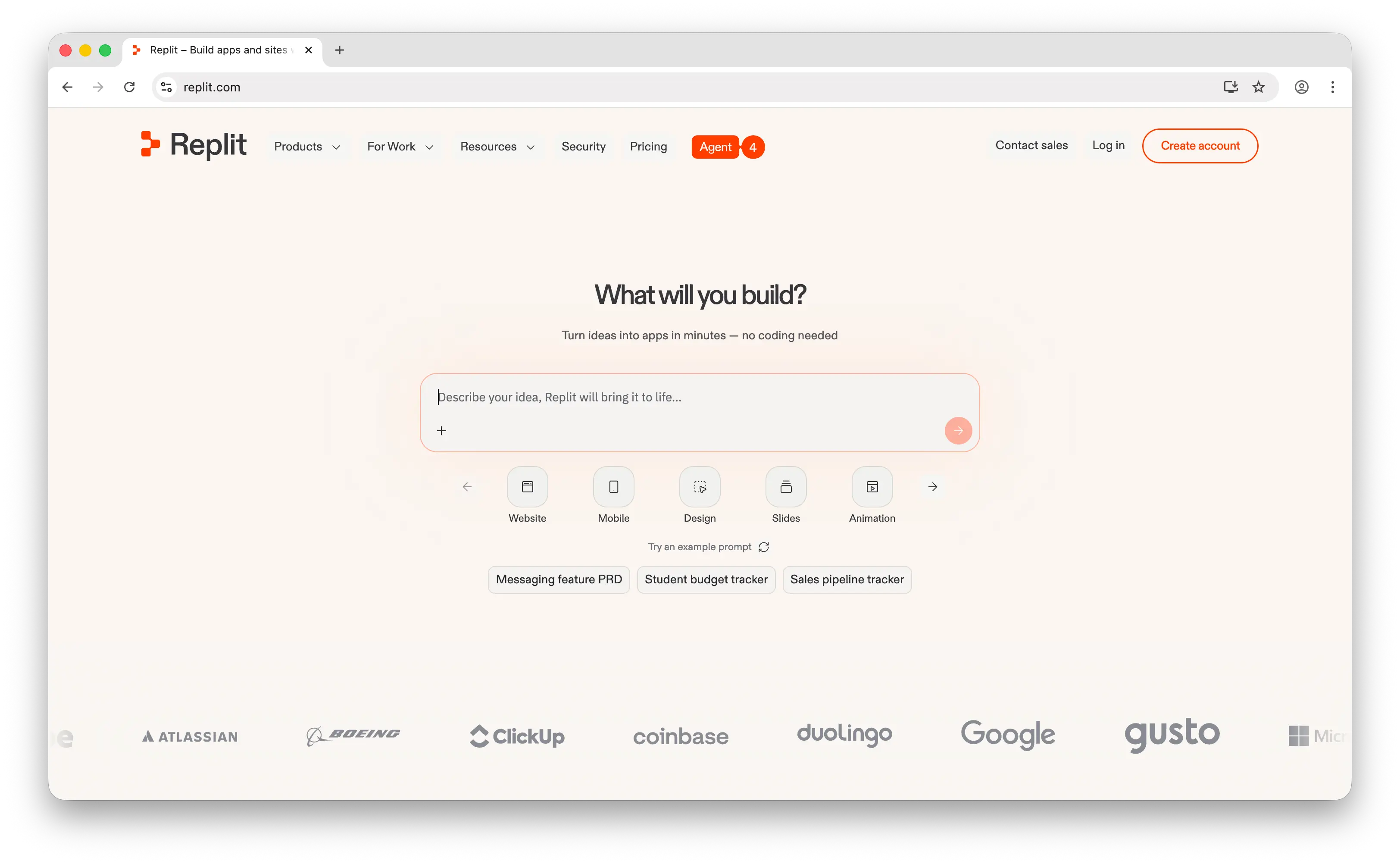
Replit is a browser-based cloud IDE with an autonomous AI Agent layered on top, native Postgres, and one-click hosting. It grew from $10M to $100M ARR in nine months — the fastest revenue ramp in the category — and Agent 3 can do long autonomous runs of up to 200 minutes per task.
What Makes It Different
Replit gives you a glass box. Where Bolt hides the IDE behind the chat, Replit is a full browser-based IDE with terminal access, version control, and the ability to inspect and override every line the AI writes. Agent 3 can write and run tests autonomously, catching edge cases without explicit prompting, and the multiplayer/collaboration story is strong — real-time editing like Google Docs.
Replit supports 50+ languages including Python, Go, and Rust, where Bolt is React/Vite primary with a handful of other frontend frameworks. Replit's database is a native Postgres instance (via Neon under the hood) — relational, with foreign keys and SQL — where Bolt's bundled DB is more limited.
Key Differences from Bolt.new
Bolt's WebContainers run the entire dev environment client-side, which makes iteration fast and avoids per-user VMs. Replit spins up remote VMs for every workspace, which is heavier but unlocks real terminal access and 50+ languages. Pricing is the same story in different clothes: Bolt's token-based meter and Replit's effort-based billing both produce stories of $100+ overage bills, and heavy Agent 3 users describe "holy credit burn" where the meter effectively runs twice — once to build, then again to verify when the Agent confidently claims work is done that isn't.
Comparison Table
| Feature | Replit | Bolt.new |
|---|---|---|
| Product shape | Full IDE + Agent + hosting | Chat-first, IDE invisible |
| Runtime | Remote VMs | WebContainers (browser-only) |
| Language support | 50+ (Python, Go, Rust, etc.) | React/Vite primary (Vue, Svelte, Astro, Next.js) |
| Long autonomous builds | Up to 200-min Agent 3 runs | Iterative, prompt-by-prompt |
| Manual code editing | Full IDE + terminal |
Limited (chat-first) |
| Autonomous testing | Agent writes & runs tests |
|
| Database | Native Postgres (via Neon) | Bundled Bolt Cloud DB |
| Multiplayer/collaboration | Real-time |
|
| Mobile app generation | Recently added |
Via Expo integration |
| Hosting | In-platform | Netlify / Vercel |
| Pricing model | Effort-based ($20–25/mo Core) | Token-based ($20–25/mo Pro) |
| Pricing predictability | Low (effort-based, "credit burn") | Low ("rarely covers a full month") |
| Overage risk | $100+ reported on heavy use | $100+ reported on heavy use |
| Open-source | |
|
| Best for | Glass-box IDE, 50+ languages, long Agent runs | Fastest path from idea to in-browser demo |
4. v0 by Vercel
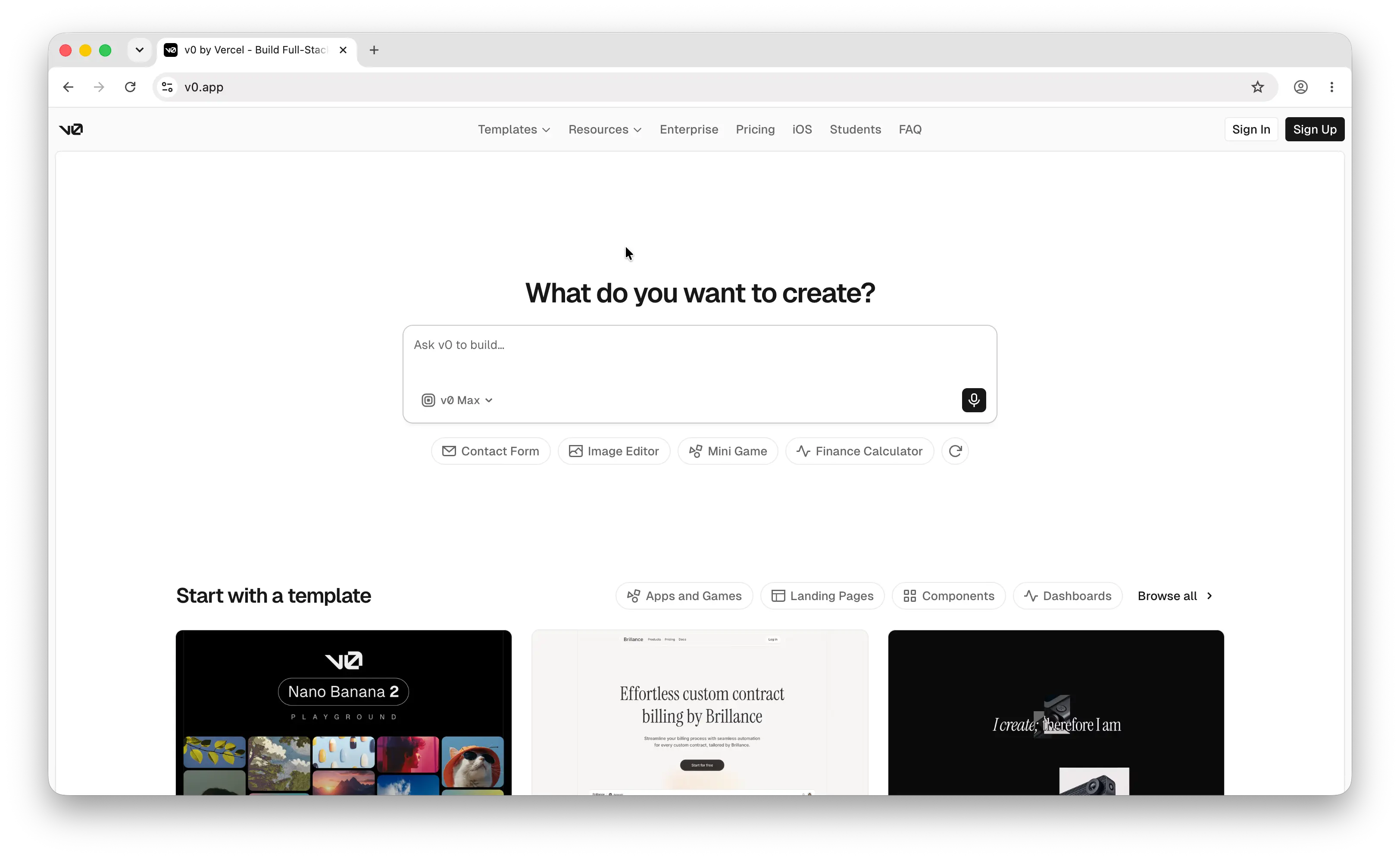
v0 is Vercel's AI app builder, rebranded from v0.dev to v0.app in January 2026. With 6 million developers on the platform and Vercel valued at $9.3 billion, v0 has grown from a UI component generator into a full-stack platform — a February 2026 update added Git integration, a VS Code-style editor, Next.js sandboxes, and database integrations with Supabase, Snowflake, and AWS.
What Makes It Different
v0 leads the category in UI component generation quality (9.5/10) and React/Next.js code quality (9.2/10) — the strongest frontend AI generation tool available. Bolt's UI defaults are good but less designer-grade. Deployment is the tightest in the category: one click to Vercel with SSL, CDN, and serverless functions wired up automatically, where Bolt typically deploys to Netlify with a slightly looser integration. Code is fully exportable to GitHub, and v0's export feels cleaner than Bolt's.
The free plan is genuinely usable for exploration ($5 monthly credits), and the multiple AI model tiers (Mini, Pro, Max) let you trade quality against token cost — though that flexibility also means "I don't know what this prompt will cost" applies even more than with Bolt.
Key Differences from Bolt.new
v0 is React/Next.js-only. Bolt supports multiple frontend frameworks (Vue, Svelte, Astro, Next.js). If your stack lives outside Next.js, v0 isn't a fit. Both are token-based and both subject to surprise bills, but v0's tiered model pricing adds another variable on top. The natural pick: v0 if you're already on Vercel/Next.js and want the cleanest deployment story; Bolt if you want framework flexibility and the in-browser WebContainers feel.
Comparison Table
| Feature | v0 by Vercel | Bolt.new |
|---|---|---|
| Stack support | React + Next.js + Tailwind + shadcn only | React/Vite + Vue/Svelte/Astro/Next.js |
| UI quality | 9.5/10 component gen, 9.2/10 React | Functional, less designer-grade |
| IDE | VS Code-style editor (Feb 2026) | Chat-first, IDE invisible |
| Git integration | |
|
| Database integrations | Supabase, Snowflake, AWS | Bundled Bolt Cloud DB |
| Deployment | One-click Vercel (SSL + CDN + functions) | Netlify / Vercel |
| Code export | Full GitHub export (cleaner) |
Full GitHub export |
| Vendor lock-in | Low (export anywhere) | Medium (WebContainers + Bolt Cloud) |
| AI model choice | Mini / Pro / Max tiers | Claude Sonnet only |
| Free tier | $5 monthly credits (usable) | Trial-only |
| Pricing model | Token-based, tiered | Token-based |
| Pricing predictability | Low (tiered tokens compound the math) | Low ("rarely covers a full month") |
| Open-source | |
|
| Best for | Teams on Vercel/Next.js wanting designer-grade UI | Multi-framework prompt-to-demo with in-browser runtime |
5. Emergent.sh
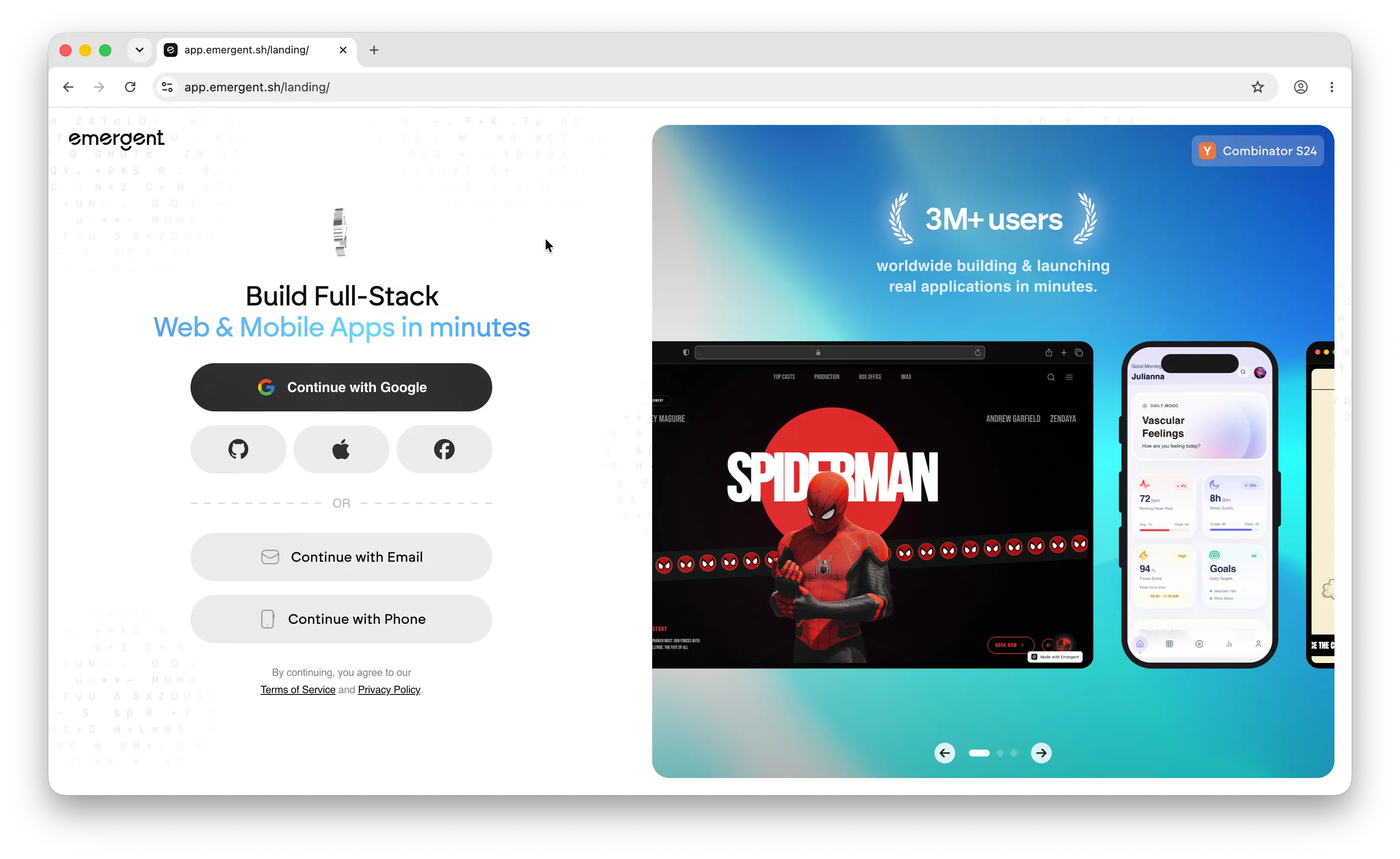
Emergent.sh is a multi-agent AI app builder positioned as the first true full-stack AI builder with a "production-first" approach. Founded by twin brothers Mukund and Madhav Jha (Google, Amazon SageMaker, Dunzo backgrounds), launched from Y Combinator, and recently raised a $70M Series B that tripled the valuation to $300M — Emergent hit 6M users and $100M ARR in eight months, with 70% of users being non-coders.
What Makes It Different
Emergent uses a multi-agent system — specialized AI agents for design, frontend, backend, testing, and deployment that collaborate on the build. Bolt uses a single agent. The result: complex apps get architected before code generation, which produces cleaner, production-grade code with proper validation, organized structure, and security best practices. Bolt's larger applications can ship with duplicate components that need cleanup; Emergent's multi-agent coordination keeps the frontend, backend, database schema, and auth coherent across the whole app.
Emergent supports 200K to 1M context windows on top plans (Bolt has smaller context limits), supports React, Node.js, and Postgres natively rather than centering on a browser runtime, and ships private GitHub repos by default. Full source code export is available on all paid tiers.
Key Differences from Bolt.new
The trade-off is speed and price. Emergent's Pro tier is $200/month versus Bolt's ~$25/month, and the multi-agent orchestration is slower than Bolt's single-agent iteration — "demo in 5 minutes" is Bolt's strength, not Emergent's. Pricing tiers are Free ($0/10 credits), Standard ($20/100 credits), Pro ($200/750 credits), and Team ($300/1,250 shared credits), with annual billing saving 17%. The biggest user complaint: unused credits do not roll over and expire at the end of each billing cycle.
Comparison Table
| Feature | Emergent.sh | Bolt.new |
|---|---|---|
| Agent architecture | Multi-agent (design, frontend, backend, testing, deploy) | Single agent |
| Positioning | Production-first | Prototype-first |
| Output quality | Clean, validated, organized | "Half-done" for production, prototype-grade |
| Stack | React, Node.js, Postgres (native) | React/Vite via WebContainers |
| Context window | 200K to 1M on top plans | Smaller |
| First-draft speed | Slower (multi-agent coordination) | Faster (single agent) |
| GitHub export | Private repos by default |
|
| Authentication | |
|
| Database | Native Postgres | Bundled Bolt Cloud DB |
| Hosting | In-platform | Netlify / Vercel |
| Pricing | $20 / $200 / $300 (credit tiers) | $20–25/mo Pro + token overages |
| Credit rollover | Expires monthly |
N/A (token-based) |
| Pricing predictability | Medium (credit-based) | Low (token-based) |
| Open-source | |
|
| Best for | Production apps you don't want to rewrite | Fast demos and prototypes |
Which Should You Choose?
Choose Puter.js if you want zero infrastructure cost and the freedom to use any AI builder. Drop in a script tag and get auth, storage, database, and 400+ AI models with no backend to provision, no tokens to burn, and no surprise bills. Your users cover their own usage. Ideal if you don't need SQL and want to escape token-based or credit-based developer billing entirely.
Choose Lovable if design quality and credit predictability matter more than speed. You'll get the prettiest default UI in the category — React + Tailwind + shadcn out of the box — and visual edits cost nothing. You trade away Bolt's in-browser WebContainers snappiness for a more polished MVP.
Choose Replit if you want a glass-box IDE, 50+ languages, and long autonomous Agent runs. You'll have a full browser-based IDE, terminal, version control, and an Agent 3 that can run for up to 200 minutes per task. Expect the same overage risk as Bolt, just in effort-based billing instead of tokens.
Choose v0 by Vercel if your app lives on Vercel and Next.js. You'll get designer-grade UI, one-click deployment, and the cleanest GitHub export in the category. Outside the React/Next.js stack, v0 isn't a fit.
Choose Emergent.sh if you want production-grade output from the first draft and you're willing to pay $200/month for it. The multi-agent system keeps frontend, backend, schema, and auth coherent across the whole app — Bolt's strength is "demo in 5 minutes"; Emergent's strength is "app you don't have to rewrite in 5 weeks."
Stick with Bolt.new if you want the fastest path from idea to working in-browser demo. WebContainers make iteration snappy, the prompt-first flow is the smoothest in the category, and Bolt remains the strongest pick for first-draft speed. Expect to clean up "half-done" output before shipping to production, and budget for token overages on top of the Pro plan.
Conclusion
The top 5 Bolt.new alternatives are Puter.js, Lovable, Replit, v0 by Vercel, and Emergent.sh. Each takes a different approach to AI-assisted app building: Puter.js eliminates developer infrastructure cost entirely, Lovable produces designer-grade UIs from chat, Replit gives you a full glass-box IDE with 50+ languages, v0 owns the React/Next.js stack on Vercel, and Emergent.sh uses multi-agent orchestration for production-grade output. The best choice depends on whether you want a bundled builder, a backend SDK you can drop into anything, a full IDE you can override, or a multi-agent system that ships cleaner code than a single agent can.
Related
- Getting Started with Puter.js
- The Best Backend Platform for Vibe Coding
- Top 5 Replit Alternatives (2026)
- User-Pays Model vs. Traditional Model
- How to Host a Website for Free
- Best Vercel Alternatives (2026)
- Top 5 Netlify Alternatives (2026)
- Top 5 Firebase Alternatives (2026)
- Top 5 Supabase Alternatives (2026)
- Best Appwrite Alternatives (2026)
Free, Serverless AI and Cloud
Start creating powerful web applications with Puter.js in seconds!
Get Started Now