Best Replicate Alternatives (2026)
On this page
Replicate is a platform for running AI models via API. It hosts over 50,000 models, charges developers based on compute time, and lets anyone publish models using its open-source packaging tool.
But did you know there are alternatives with unique features and potentially better offerings for your use case?
In this article, you'll learn about five Replicate alternatives, how they compare, and which one might be the best fit for your project.
1. Puter.js
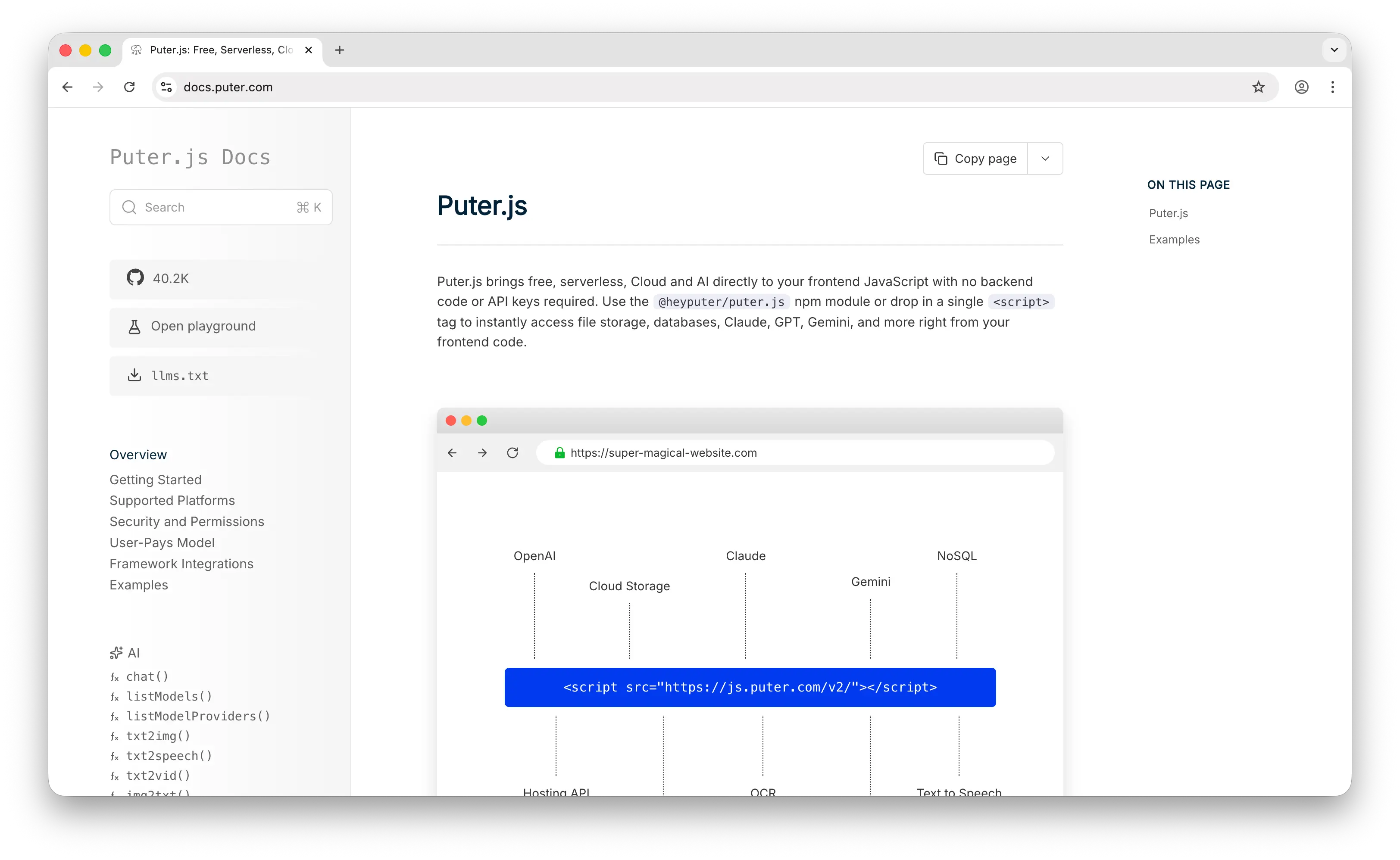
Puter.js is a JavaScript library that bundles AI, database, cloud storage, authentication, and more into a single package. It supports over 400 models from providers like OpenAI, Anthropic, Google, Meta, and others, spanning chat, image generation, video generation, text-to-speech, and speech-to-text.
What Makes It Different
Puter.js pioneered the User-Pays Model: your app users cover their own AI usage costs through their Puter account. Developers pay nothing for AI inference, no API key, no backend, no server-side setup required. This is fundamentally different from Replicate, where the developer is billed for every second of compute time.
Puter.js also goes beyond what Replicate offers in terms of built-in services. Alongside AI, you get cloud storage, a key-value database, and user authentication, all from a single library. For web app developers, this eliminates the need to piece together separate services.
Key Differences from Replicate
Puter.js is primarily designed for web apps running on the frontend. While it works in Node.js, the user-pays model is most natural in a browser context. Unlike Replicate, Puter.js does not support custom model publishing, embeddings, or community-contributed models. Its model catalog (400+) is curated from major providers rather than open to community uploads like Replicate's 50,000+ Cog-based models.
Replicate uses a proprietary REST API, while Puter.js uses its own JavaScript SDK.
Comparison Table
| Feature | Puter.js | Replicate |
|---|---|---|
| Pricing model | User-pays (free for devs) | Per-second compute / per-token / per-output |
| Free tier |  (free for developers) (free for developers) |
 |
| API key required | No | Yes |
| Chat models | Extensive (380+) |
Growing |
| Image generation | |
Excellent |
| Video generation | |
Excellent |
| Audio (TTS/STT) | |
|
| Embeddings | |
|
| Open-source models | |
|
| Closed-source models | |
|
| Custom/community models | |
50,000+ (via Cog) |
| Fine-tuning | |
|
| Batch inference | |
(async predictions) |
| Fallback/routing | |
|
| Built-in services (DB, storage, auth) | |
|
| Model update speed | Fast | Moderate for LLMs, fast for media |
| Best for | Web app devs who want zero-cost AI integration | Media generation, custom model hosting |
2. Together AI
Together AI is a full-stack AI inference and training platform focused on open-source models. It provides serverless inference, dedicated GPU endpoints, batch processing, and fine-tuning, all backed by research-driven optimizations like FlashAttention.
What Makes It Different
Together AI is not just a place to run models, it's AI infrastructure. It offers dedicated GPU endpoints with guaranteed throughput, GPU clusters (H100/H200) you can provision in minutes, and batch inference at a 50% discount. These are capabilities Replicate doesn't emphasize, particularly for teams that need predictable performance at scale.
Its API is also OpenAI-compatible, meaning you can swap the base URL and use existing OpenAI client libraries. Replicate uses a proprietary API, so migrating from Replicate to Together AI requires more code changes than vice versa.
Key Differences from Replicate
Together AI focuses almost exclusively on open-source models. It does not offer closed-source models like GPT or Claude, which Replicate does. Its model catalog (~200 models) is also much smaller than Replicate's 50,000+, though it covers the most popular open-source models. Together AI does not support community model publishing like Replicate's Cog ecosystem.
Together AI's pricing is per-token for serverless inference, while Replicate charges per-second of compute time or per-output. Per-token pricing is more predictable for text workloads, while per-second pricing can be more cost-effective for media generation.
Together AI offers $25 in free credits for new users. Replicate does not have a free tier.
Comparison Table
| Feature | Together AI | Replicate |
|---|---|---|
| Pricing model | Per-token (serverless) / per-GPU-hour (dedicated) | Per-second compute / per-token / per-output |
| Free tier | ($25 credit) |
|
| Open-source models | Extensive (200+) |
Extensive |
| Closed-source models | |
(GPT, Claude, Gemini) |
| Chat/LLM models | Extensive |
Growing |
| Image generation | |
Excellent |
| Video generation | Limited | Excellent |
| Audio models | |
|
| Embeddings | |
|
| Reranking models | |
|
| Custom/community models | Upload from Hugging Face | 50,000+ (via Cog) |
| Fine-tuning | (full + LoRA) |
|
| Dedicated endpoints | |
|
| GPU clusters | (H100/H200) |
|
| Batch inference | (50% discount) |
(async predictions) |
| OpenAI-compatible API | |
|
| Fallback/routing | |
|
| Model update speed | Moderate | Moderate for LLMs, fast for media |
| Best for | Teams needing fast LLM inference, fine-tuning, and GPU infra | Media generation, community models, custom hosting |
3. OpenRouter
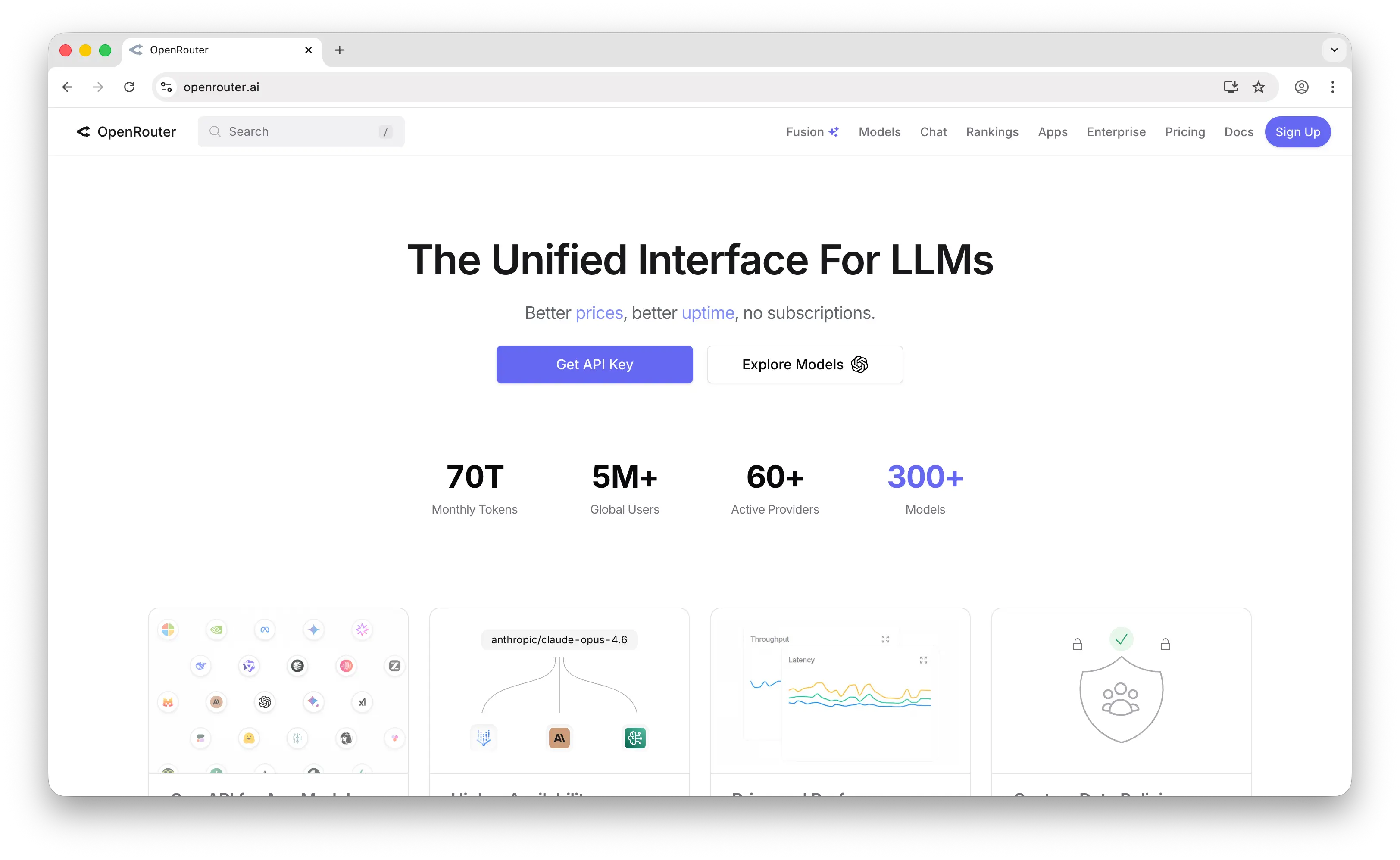
OpenRouter is a unified API gateway that provides access to 300+ models from 60+ providers through a single API key. It handles routing, fallback, and billing across providers like OpenAI, Anthropic, Google, Meta, and others.
What Makes It Different
OpenRouter takes the opposite approach to Replicate. Instead of hosting and running models on its own infrastructure, OpenRouter routes your requests to the best available provider. It offers automatic fallback when providers go down, provider preferences by cost or speed, and variant suffixes (:free, :nitro, :floor) for fine-grained routing control.
Its API is fully OpenAI-compatible, making it a drop-in replacement for any app already using the OpenAI SDK. OpenRouter also supports OAuth PKCE, letting your users bring their own OpenRouter accounts, somewhat similar to Puter.js's user-pays concept.
For LLM access specifically, OpenRouter's catalog is broader and more up-to-date than Replicate's. It adds new models faster and has better coverage of both open-source and closed-source chat models.
Key Differences from Replicate
OpenRouter is not an infrastructure platform. It doesn't host models, offer fine-tuning, provide batch inference, or support custom model deployment. If you need to run a custom Stable Diffusion variant or a community-published model, OpenRouter can't help, that's where Replicate excels.
OpenRouter's media generation support is also limited: image generation is available, video is experimental, and audio is not supported. Replicate's strength is precisely in these media-heavy workloads.
Pricing differs fundamentally: OpenRouter charges a 5.5% fee on credit purchases and passes through provider pricing at cost. Replicate charges per-second of compute time or per-output, with pricing that varies by GPU hardware.
Comparison Table
| Feature | OpenRouter | Replicate |
|---|---|---|
| Pricing model | Pay-as-you-go (5.5% credit fee) | Per-second compute / per-token / per-output |
| Free tier | (free models with rate limits) |
|
| Chat/LLM models | Extensive (300+) |
Growing |
| Image generation | |
Excellent |
| Video generation | Experimental | Excellent |
| Audio models | |
|
| Embeddings | |
|
| Open-source models | |
|
| Closed-source models | Extensive |
|
| Custom/community models | |
50,000+ (via Cog) |
| Fine-tuning | |
|
| Batch inference | |
(async predictions) |
| Fallback/routing | (automatic) |
|
| OpenAI-compatible API | |
|
| Model publishing | |
(via Cog) |
| Model update speed | Fast | Moderate for LLMs, fast for media |
| Best for | Broad LLM access with multi-provider routing | Media generation, community models, custom hosting |
4. Hugging Face Endpoints
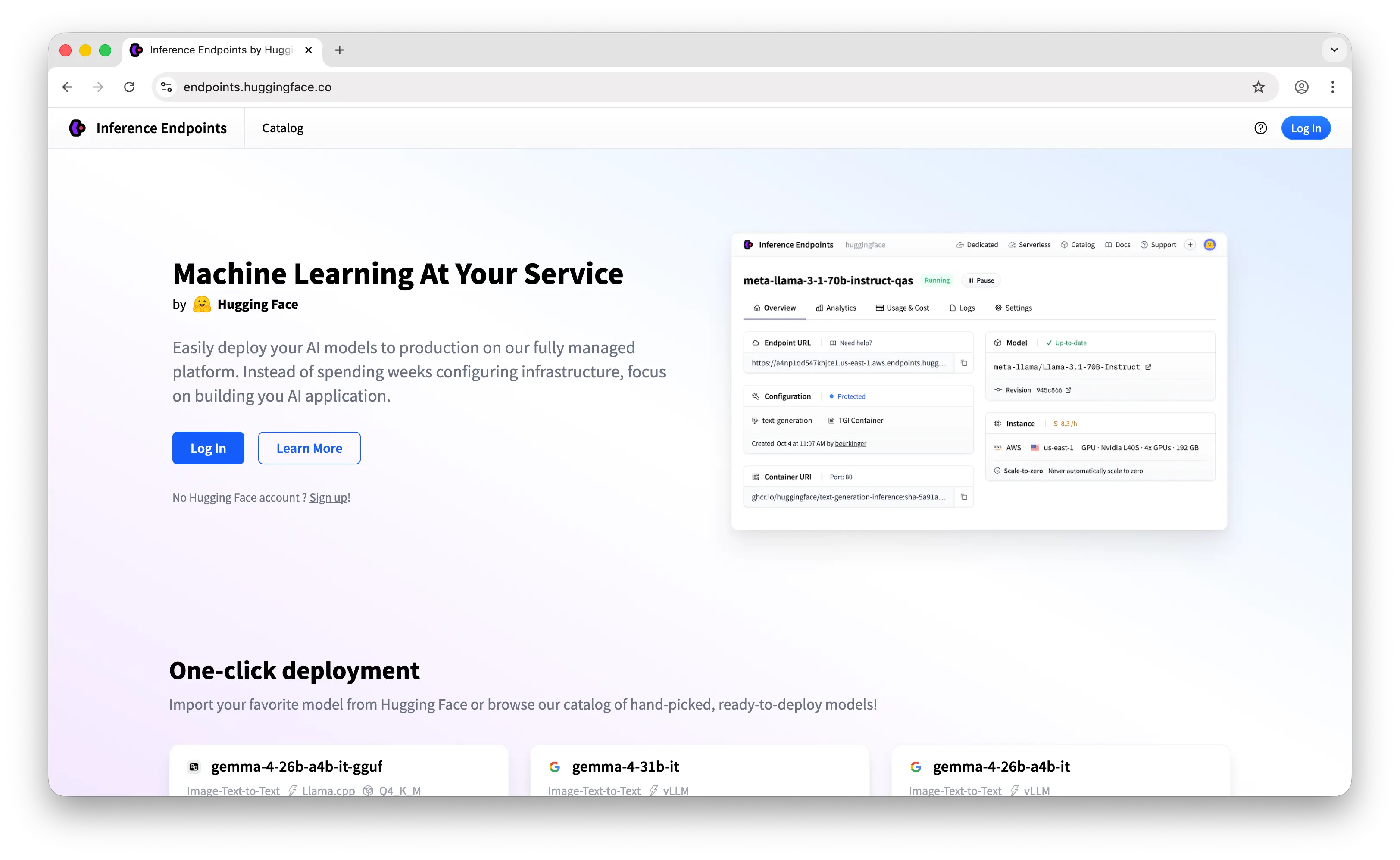
Hugging Face Inference Endpoints is a service for deploying any model from the Hugging Face Hub on dedicated, fully managed infrastructure. You pick a model from the Hub's 2 million+ catalog, choose your GPU hardware, and get a production-ready API endpoint with autoscaling, scale-to-zero, and private networking.
What Makes It Different
Inference Endpoints gives you dedicated infrastructure for your models, something Replicate doesn't offer. Each endpoint runs on reserved hardware (CPU, GPU, or multi-GPU), so you get predictable latency and throughput without competing for resources with other users. Endpoints can scale to zero when idle, meaning you only pay when traffic comes in, and automatically scale up under load.
The key advantage is access to the Hugging Face Hub's 2 million+ models. Any model on the Hub, whether it's a popular Llama variant, a niche fine-tuned diffusion model, or your own private model, can be deployed as an endpoint in a few clicks. Replicate requires models to be packaged with Cog before they can be deployed, which adds friction.
Inference Endpoints also supports custom containers: you can use Hugging Face's optimized runtimes (TGI for text generation, TEI for embeddings, Diffusers for image/video) or bring your own Docker container. The API is OpenAI-compatible, so existing integrations work without code changes.
Key Differences from Replicate
Inference Endpoints is focused on dedicated deployment, not serverless pay-per-call like Replicate. This means higher baseline costs (you pay per minute of uptime, starting at ~$0.03/hr for CPU and ~$0.50/hr for GPU), but more consistent performance. Scale-to-zero helps, but if your model gets sporadic traffic, Replicate's per-prediction pricing may be cheaper.
Inference Endpoints only supports open-source/open-weight models from the Hub. It does not offer closed-source models like GPT or Claude, which Replicate does. It also doesn't have a community marketplace like Replicate's Cog ecosystem, though the Hub itself is a far larger model repository.
For fine-tuning, Hugging Face offers AutoTrain (no-code) and full support for LoRA/QLoRA/DPO through the Transformers library, which is more flexible than Replicate's built-in fine-tuning.
Comparison Table
| Feature | HF Inference Endpoints | Replicate |
|---|---|---|
| Pricing model | Per-minute uptime (dedicated hardware) | Per-second compute / per-token / per-output |
| Free tier | (free CPU endpoints) |
|
| Deployable models | 2,000,000+ (any Hub model) | 50,000+ (Cog-packaged) |
| Chat/LLM models | Extensive (via TGI) |
Growing |
| Image generation | (via Diffusers) |
Excellent |
| Video generation | (via Diffusers) |
Excellent |
| Audio models | |
|
| Embeddings | (via TEI) |
|
| Open-source models | Extensive |
|
| Closed-source models | |
(GPT, Claude, Gemini) |
| Dedicated hardware | (GPU selection, autoscaling) |
|
| Scale-to-zero | |
|
| Custom containers | (TGI, TEI, Diffusers, Docker) |
(via Cog) |
| Private networking | (AWS/Azure PrivateLink) |
|
| Fine-tuning | (AutoTrain, LoRA, QLoRA, DPO) |
|
| Community model publishing | (Hub uploads) |
(via Cog) |
| OpenAI-compatible API | |
|
| Fallback/routing | (per-endpoint) |
|
| Model update speed | Fast (researchers publish to Hub first) | Moderate for LLMs, fast for media |
| Best for | Dedicated deployment of open-source models with full infra control | Serverless pay-per-prediction with broad model access |
5. fal.ai
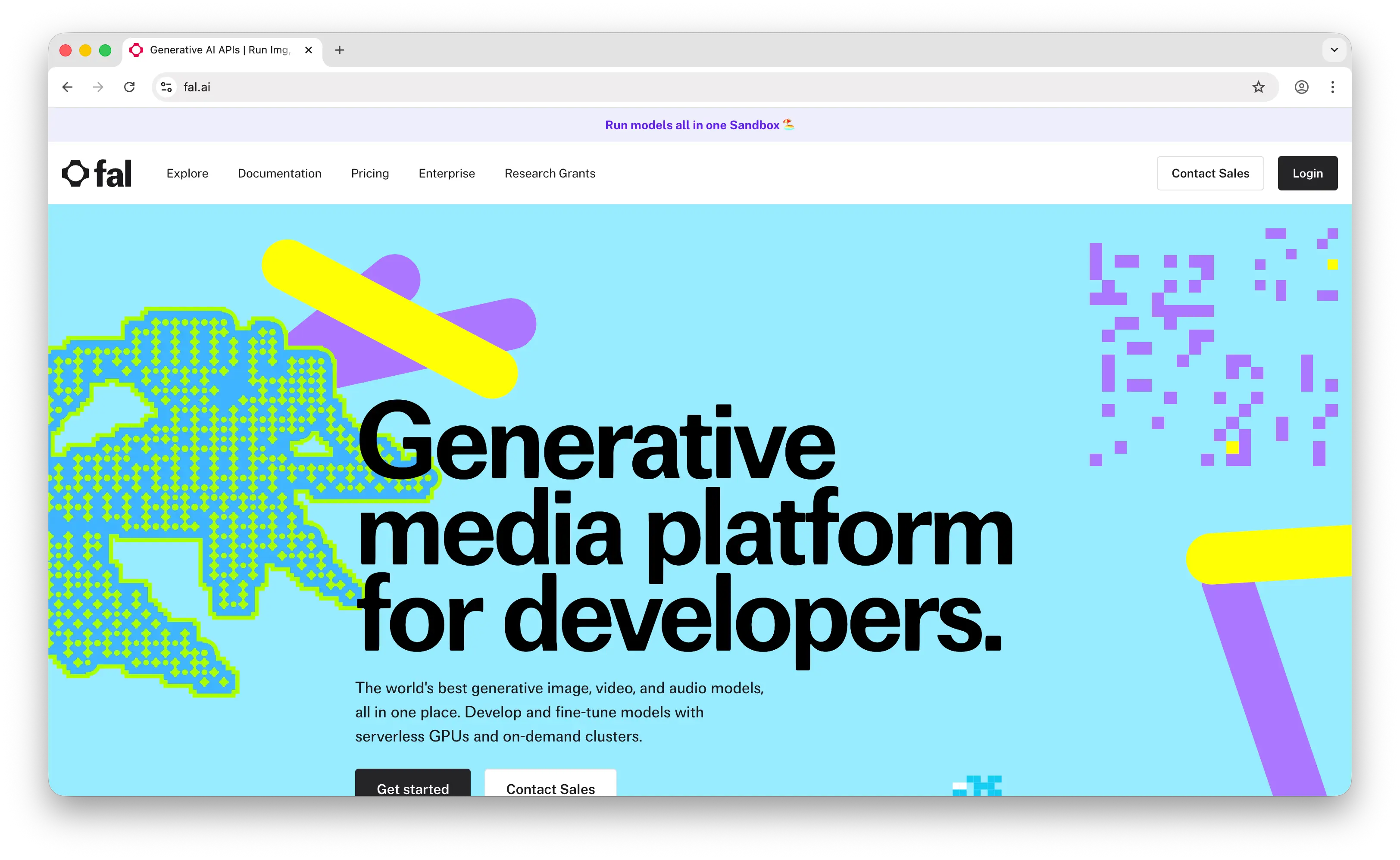
fal.ai is a generative media inference platform built for speed. It runs over 1,000 models for image, video, audio, and 3D generation on a globally distributed serverless GPU infrastructure with custom CUDA kernels. It holds roughly 50% market share for image generation APIs and 44% for video generation APIs.
What Makes It Different
fal.ai is Replicate's most direct competitor in the media generation space, and it's faster. Its custom CUDA kernels and optimized infrastructure deliver up to 4x faster inference, with near-zero cold starts on warm models. For latency-sensitive applications like real-time image generation or interactive video editing, this speed advantage matters.
fal.ai's pricing is output-based: you pay per image ($0.02-$0.04), per video second ($0.05-$0.40), or per megapixel rather than per second of compute time. This makes costs more predictable since you know exactly what you'll pay for each generation, regardless of how long the GPU takes.
fal.ai also supports fine-tuning (including one-click LoRA training), custom model deployment via fal Serverless and fal Deploy, and dedicated GPU compute with SSH access for full control.
Key Differences from Replicate
fal.ai is focused on generative media. It does not have a strong LLM offering and routes chat model requests through OpenRouter instead. If you need both LLMs and media generation from a single platform, Replicate is more versatile.
Replicate's community model ecosystem (50,000+ Cog models) is far larger than fal.ai's 1,000+ curated models. If you need niche or specialized models uploaded by the community, Replicate has more selection. However, for mainstream image and video models (Flux, Stable Diffusion, Kling, Wan), fal.ai typically has them running faster and cheaper.
fal.ai also has a built-in queue system with webhooks and priority tiers, which is well-suited for production workloads that need reliable async processing.
Comparison Table
| Feature | fal.ai | Replicate |
|---|---|---|
| Pricing model | Per-output (per image/video second) | Per-second compute / per-token / per-output |
| Free tier | (free credits) |
|
| Chat/LLM models | Limited (via OpenRouter) | Growing |
| Image generation | Excellent (50% market share) |
Excellent |
| Video generation | Excellent (44% market share) |
Excellent |
| Audio models | |
|
| 3D generation | |
Limited |
| Embeddings | |
|
| Open-source models | |
|
| Closed-source models | (Kling, Hailuo, Veo) |
(GPT, Claude, Gemini) |
| Custom/community models | Limited (1,000+ curated) | 50,000+ (via Cog) |
| Fine-tuning | (LoRA, one-click) |
|
| Custom model deployment | (Serverless, Deploy, Compute) |
(via Cog) |
| Dedicated GPU compute | (with SSH access) |
|
| Cold start latency | Near-zero on warm models | Can be slow on less-popular models |
| Queue system with webhooks | (built-in, priority tiers) |
(async predictions) |
| Inference speed | Up to 4x faster (custom CUDA kernels) | Standard |
| Fallback/routing | |
|
| Model update speed | Fast for media models | Fast for media models |
| Best for | Fast, cost-effective media generation at scale | Broad model ecosystem, community models |
Which Should You Choose?
Choose Puter.js if you're building a web app and want to add AI features without any API costs or backend setup. The user-pays model means your users cover their own usage, making it ideal for developers and startups that don't want to worry about scaling inference costs.
Choose Together AI if you need to fine-tune open-source language models, run batch workloads at a discount, or need dedicated GPU infrastructure with guaranteed throughput. Its OpenAI-compatible API also makes migration straightforward.
Choose OpenRouter if your primary need is LLM access across many providers with automatic fallback and routing. It's the simplest option for teams that want broad model coverage (both open and closed-source) through a single, OpenAI-compatible endpoint.
Choose Hugging Face Inference Endpoints if you need dedicated, autoscaling infrastructure for deploying open-source models with predictable performance. It's the best option if you want full control over hardware, private networking, and the ability to deploy any of the 2 million+ models on the Hugging Face Hub.
Choose fal.ai if media generation (images, video, audio, 3D) is your primary workload and speed matters. Its output-based pricing, near-zero cold starts, and custom CUDA optimizations make it the fastest and most cost-effective option for generative media at scale.
Stick with Replicate if you value the largest community model ecosystem (50,000+ Cog models), need a single platform that handles both LLMs and media generation, or rely on niche community-published models that aren't available elsewhere. Replicate's Cloudflare integration is also improving its edge performance over time.
Conclusion
The best Replicate alternatives are Puter.js, Together AI, OpenRouter, Hugging Face Inference Endpoints, and fal.ai. Each takes a different approach: Puter.js eliminates developer costs entirely, Together AI provides deep GPU infrastructure for open-source models, OpenRouter offers the broadest LLM routing, Hugging Face Inference Endpoints gives you dedicated deployment with full infrastructure control, and fal.ai delivers the fastest media generation. The best choice depends on your workload, whether that's web app AI, LLM inference, dedicated model deployment, or media generation.
Related
Free, Serverless AI and Cloud
Start creating powerful web applications with Puter.js in seconds!
Get Started Now